Major Post 16 – Neon Genesis Evangelion

Neon Genesis Evangelion is a Japanese mecha anime television series produced by Gainax and Tatsunoko Production. It is a milestone in the history of Japanese animation and is recognized as one of the greatest animations in Japanese history.

Evangelion is one of the few animations that can cause large-scale public debate in all ages. Evangelion was first shown in childhood in Japan, and the results were not popular. However, after playing in adult time, it produced explosive repercussions and rekindled a large number of adults’ love for animation.

Evangelion brings a full range of innovations that are rare in the past and in the future. In the aspect of narration, the theme of the story, flashback, symbol and hint, world view, new definition of hero hero. In terms of vision, the design of the body, violence and blood, white characters on black background, super long frames, high-speed flash frames, live movie segments. As well as Christian, Jewish symbols, psychological terms. All of these make Evangelion a unique style of animation. In addition, the characters in the animation show different degrees of emotional disorder and mental illness symptoms (especially depression and anxiety), and the story itself also shows a strong existential color. Thus, whether it is its artistic form, or the psychological role it plays in the play and the psychological problems of anxiety, autism, social incompatibility, etc., which are common in the younger generation of the post bubble economy era, or the description of the dark psychology depicted in the narration, Evangelion has aroused strong recognition from the audience.
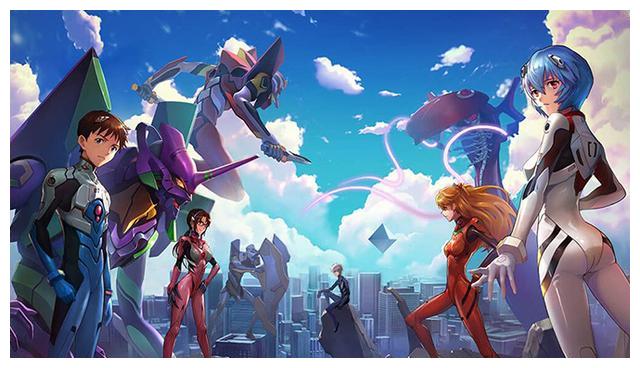
The revolutionary strong stream of consciousness technique and the use of a large number of religious and philosophical images in the film set off a huge echo and impact in Japanese society, which is called social phenomenon, and became a milestone in the history of Japanese animation, and was recognized as one of the greatest animations in Japanese history.

Major Post 15 – Chinese Animation

I would like to share a Chinese 2D animated film released this summer vacation, The Legend of Hei.

As early as 2011, mtjj, an independent Chinese producer, created the role of Luo Xiaohei and also created animated TV series. With its straight character style, wonderful plot and profound world view, the play has attracted millions of viewers and is known as the bright star of domestic animation industry. Despite the shortage of funds and personnel, mtjj never gave up.  That’s why this 100 minute two-dimensional animated film of the same name has set off a carnival for fans this summer. Not only the smooth painting style can be compared with the world-famous Ghibli and Kyoto animation studio, but also the intimate growth story touches the audience’s heart, making people hide Easter eggs everywhere and pay homage to the classic. Last but not least, the film portraits a true Chinese style atmosphere with a glimpse of ancient and modern China together. The movie do have a relatively slow pacing of daily life stories In the first half which may cause some audience fell a little bit dull. Whatever the flaws, it still resembles a milestone of modern day 2D Chinese animated films

Major Post 14- Pinscreen Animation

Pinscreen animation makes use of a screen filled with movable pins, which can be moved in or out by pressing an object onto the screen. Drill millions of pins holes in the metal plate and insert the steel pins into the hole. The screen is lit from the side so that the pins cast shadows. Because the depth of needle eye changes to form different levels of shadow, showing lines and shapes, and then frame by frame into the film.

The cold and hard steel plate and steel pins, with the creativity of animation artists, make use of pins change and light design, to create the lively, creative, humorous, imaginative and philosophical ideas in the animation. The flexible tension and artistic conception expressed by the pinscreen animations are incomparable with other animation techniques. This technology can achieve some special effects that the traditional stop frame animation cannot complete, and the style is unique and strong.

Night on bald mountain is the first pinscreen animation. The unique quirky atmosphere of pinscreen animation and the changing effect of static and dynamic perfectly restore this imaginative wild work. The film is only 8 minutes long, but it creates a frightening atmosphere through flowing images, laying an important foundation for the development of later animation.

Major Post 13- Animated Documentary

According to the classic definition of documentary, it can be clear that the most important feature of documentary is its non fiction, that is, the authenticity of recording materials, but the definition of “creative processing” leads to the broadness of the extension boundary of documentary, which leads to the special branch of animated documentary. Animation documentary is a kind of film type combining animation and documentary.

Different from the general documentary form, it may seem unique and absurd to present it with animation, but this is just an innovative form. The new form of animation, as an “alternative excavation of realism”, challenges the traditional way of documentary production. The challenge lies not only in the way of presentation, but also in the challenge to the meaning of “truth”.

The essence of documentary is fiction, that is, the fiction of reality. The biggest characteristic of animation is to assume that no matter the character image or the scene itself can not be found from the reality at all. However, the animation character or the animation scene are all the mapping of real life. Moreover, the animation documentary is quite different. All the virtual animation characters and scenes it presents have real people and things as the prototype. ” This point and based on the real events adapted from the film and some of the same place.

Major Post 12- Glove puppetry

Glove puppetry is a type of opera using cloth puppets that originated during the 17th century in Quanzhou or Zhangzhou of China’s Fujian province. It had since established itself contemporarily as a popular art form in Taiwan.

The puppet’s head uses wood carved into the shape of a hollow human head, but aside from the head, palms, and feet, which are made of wood, the puppet’s torso and limbs consist entirely of cloth costumes. At the time of the performance, a gloved hand enters the puppet’s costume and makes it perform. In previous years the puppets used in this type of performance strongly resembled “cloth sacks,” hence the name, which literally means “cloth bag opera.”

PILI Puppet Drama is one of the masterpieces of Glove puppetry. Its performing technique is different from traditional glove puppetry. It strengthens the effect of sound and light blasting, uses computer special effects, enlarges and refines puppets, improves the way of puppet operation, etc. The eye part of the puppet evolved from the early brush eye to the glass eye; the hair part evolved from the traditional plastic wig to the real hair; in terms of size and modeling, the puppet size increased, the modeling handsome beautification and simulation. The hands evolved from wooden hands with the thumb separated from the other four fingers and the fingers only bent and unable to move to plastic hands that can be grasped freely by five fingers; the feet changed from traditional cloth legs that cannot be bent to movable feet that can be kicked or kneeled after the joint is installed. In recent years, the baby making technology of “BJD” system has been introduced into thunderbolt puppet show, which is the so-called “movable joint humanoid” high simulation technology.

Major Post 11- Puppet Animation

Puppet animation is developed from object animation. Instead of using objects, it uses puppets. Puppet animation is a kind of development to stop motion animation, not to introduce puppets in different frames, but because puppets have human qualities, so directors can move puppets more freely and show different actions more easily It works by taking pictures and moving puppets in different frames.

The Hand is a 1965 Czechoslovak stop motion puppet animation film directed by Jiří Trnka. The plot is about when a craftsman in the industry of making flowerpots devotes himself to his work, he is forced to make a statue for a huge hand. The craftsman refuses to obey the orders and drives the hand out of the door. However, this hand cannot be driven away. It is everywhere. In addition to the doors and windows, it can also convey the orders by telephone, television and newspaper. In the end, the artisan gave in, but he had to be strictly controlled to work in a huge cage, and once he stepped into the cage, he could not get out.

The fate of craftsmen and various suggestive performances of the hand. The conflict between power and individual is sharp and oppressive in the narrow space. Although the scene and puppet expression are not rich, the puppet’s action performance is excellent. Whether it’s the quick broom or the flustered little movements. In the same way, the performance of the hand is also indispensable. The slightly delicate movements and the conversion of black and white gloves make the negative role full of vitality.

The mastery of lens, lighting and splicing control in many roles reflects the director’s superb skill level.

Major Post 10-Tango(1980)

Tango is a kind of weird dance. The dancers don’t always face each other, but show their absent mindedness and lack of eye contact. Both sides are dancing while maintaining an independent posture. It is said that tango was originally a secret dance between lovers, that is to say, it is an ambiguous way of expression. There is another kind of indistinct connection between dancers outside the dance, which is exactly the metaphor of this film.

The film juxtaposes the scenes of life in the same space at different times. In each individual scene, each person goes his own way, which is consistent with other scenes. Seemingly chaotic but orderly, this juxtaposition produces a kind of rhythm, just like the superposition of different musical instruments and melodies in music, just like the juxtaposition of different dancers’ body language. As a scene or individual, it appears in the deliberately created time sequence, from single to numerous, from simple to complex, which has formed an ambiguous image language.

From the perspective of lens language, the film is shot with a single lens and there is no story. But the live action film won the Academy Award for best animated short film in 1982. For a short film that has neither camera language nor narrative method, it really pursues a new sense of form. Compared with the sense of lens that the real film is good at, the sense of form is just the strength of animation. Because animation is not limited by the camera, so the creation of the picture can be as free as painting, and this film just gives up the sense of lens that the real film is good at, and uses the special effects in the later period to create a unique form that is no less than animation, and plays the advantages of animation to the fullest.

Major Post 09-Harpya

Harpya is a 1979 short Belgian animated film written and directed by Raoul Servais. This is a purely technical experiment, the first attempt to combine real images with animation, the results are very satisfactory. The audience was shocked, but also alarmed. He uses a 35mm camera to shoot, and all the things that don’t need to be exposed are covered with black velvet, which is very complicated and cumbersome.

Harpy is a banshee with the body and head of an eagle in Greek mythology. Its general image is fierce and aggressive. I feel that harpy symbolizes women and food symbolizes desire in the film. The reincarnation of the ending is that different men fall into the trap again and again.

The first scene in which harpy meets a man is when a man hears a scream and saves harpy. It’s a position of weakness for harpy. But when the man saw her whole face again, he didn’t regard her as a monster, instead, he felt novel, beautiful and even awed (the man took off his hat in front of her). Standing under the fountain, harpy is more like a goddess than a monster.

When harpy first came to the man’s house, she was like a pet until she showed that she controlled the man’s life. Several times in the film, it shows how harpy gobbles: the shape of a woman, the behavior of a raptor. Every time a man wants to eat something, he will appear. Robbing and eating food is robbing and containment. Cutting off a man’s lower body is a metaphor for depriving him of his freedom.

The image design of harpy is also interesting. She’s bald. Maybe the director wants to make this image weird. I really like the combination of real people and animation.

Major Post 08 – Pixelation Animation

Pixilation is a style of animation that is very similar to stop motion. It using people instead of puppets. Actors gradually make different actions, and they can not follow the normal physical rules when making, showing many more interesting ideas.

Neighbours(1952 film) shown in class are an example. It is a story about two men live peacefully in adjacent cardboard houses. When a flower blooms between their houses, they fight each other to the death over the ownership of the single small flower. In the movie, white fences are used as weapons to hurt each other. Eventually, they were surrounded the two men’s graves and even turned into crosses laid flat on the graves.

The movie only uses these very simple props, but through different placement and use methods, it has produced different effects. I think it’s very successful.

When making Pixilation animation, I think we should also think about whether ordinary props, which are very common at ordinary times, can show different feelings under narrative and shooting techniques.

Major Post 07-Visual Music

Painting and music have distinct similarities. They also have melody and rhythm, expressing rich inner feelings. What music can reflect, art works can also reflect, and even more intense color can be used to guide the audience. Visual music artists use the method of creating music to pursue the appeal of music in painting, thus completing the creation of visual music.

The main elements of visual music, such as points, lines, planes and colors, should have special aesthetic meanings, including unique appeal and plot. This is an abstract visual experience beyond the literary language.

In a visual music video presented in class, the professor joked that the white lines on the picture dancing with the rhythm were like dancing cigarettes, which impressed me deeply.

I think that simple and pleasant lines can well interpret the music with a pleasant rhythm. If I were to do a visual music work, I would be happy to use a lot of lines to complete it. Because this is a very smart and effective method, but also can create a successful visual effect.