Major Post 06- Disney’s Characters

We watched a lot of Disney movies in class. Before that, I didn’t know much about the popular characters in the early black and white animation. Now I know more of Disney’s classic characters and how they created.
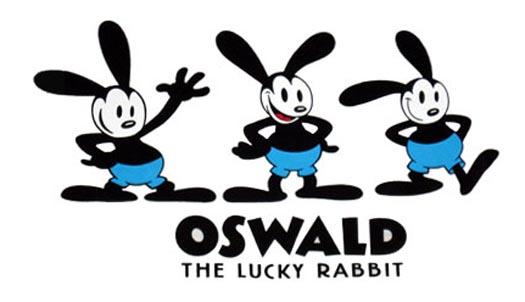
Disney was founded by Walt Disney in 1926, when they created a character, hoping that he would become the protagonist of animation, and that he would bring good luck to the company. This character is not Mickey Mouse, but Oswald the lucky rabbit. But the character was stripped of copyright by Universal studios in 1928, and Walt Disney lost a lot of good animators.

After Walt Disney understood the importance of copyright, Walt Disney once again created a new animated character, which appeared in the movie Steamboat Willie on November 18, 1928. This character is Mickey Mouse, which we are familiar with.

From 1928 to 1947, Mickey Mouse was voiced by Walt Disney himself, and Mickey Mouse became the first cartoon character to have an exclusive location on Hollywood Star Avenue.

Anyone who has seen Disney Mickey Mouse animation will find that the characters have only four fingers, and according to Disney’s official explanation, they think that a mouse has five fingers is a little too many and looks strange.

On the other hand, because of budgetary considerations, if it took 45,000 compositions to make a half-and-a-half animation, it would save the company a lot of time and budget if it spent less than one finger, so Mickey had only four fingers left.

Major Post 05- Cutout Animation

Cutout animation uses paper-cut to represent the plot. Use paper to cut or carve objects and background props, paint colors and assemble joints. When shooting, according to the needs of the plot, the activities of the characters and scenery are decomposed into several different postures step by step, which are placed on the glass, manipulated by the human, and then the joints are pulled in turn. The movable images are taken by the method of progressive photography, and are formed by continuous projection.

Chinese paper cutting is an ancient art form passed on from generation to generation. Therefore, Chinese paper cutting animation combines traditional paper-cut skills to create exquisite scenes.

The Fox and the Hunter (1978) is a Chinese cutout animation. The film tells the story of a cunning fox who uses legends to disguise himself as a monster to scare young hunters into losing their guns and fleeing for their lives. Old hunters see through the fox’s tricks and kill them. At the beginning of the creation, the designer failed many times when he designed the fox, because he loved the fox very much, so that the fox that was supposed to be cunning and treacherous became more and more lovely. The director said he wanted to hug it. So the designer drew more than twenty pictures before they passed. But the wolf’s shape is a success, because the designer hates the wolf deeply. This worries me a lot about the cutout animation project we are going to do. I think Janelle will certainly be unable to make up her mind about the final design of animal characters.

Major Post 04- French Animation

French animation has its own style, unlike the animation in the United States, Japan and other regions (mostly commercial), French animation usually has connotative storyline, and philosophical thinking. French animation has always been dominated by short films with fresh or profound connotations. Its unique character style, color style and overall sense of artistic form can leave a deep impression on the audience.

Unlike Disney animation, French animation is stylized, which reflects the individual style of artists combined with local traditional culture.

In French animation, there are more absurd plots, more exaggeration in the style, artistic form and expression techniques of the picture, and more exaggeration in the character modeling. The overall style of the film uses a large area of white, black, monochrome or homochrome, usually using color psychology to foil the development of events.

Skizein (2008) shown in class is a typical French animated short film.

For animated short films, simple and contradictory stories are particularly important. In just a few minutes, we need not only simple and easy to understand, but also a strong explosive point. Proper design of some turning point, suspense, or trigger some resonance, will succeed in attracting the attention of the audience.

Major Post 03- The Idea

The movie The Idea (1932), which lasted for nearly half an hour, was hard to understand when it first watched. The film is made up of multi-layer transparent films, and the effects of halo and smoke are produced by the use of soap bubbles and glass panels. Although the picture is slightly blurred, it retains the graphic style of the printmaking while bringing special effects of light and shadow to the film. In addition, the short film is considered to be the earliest use of electronic instruments in the history of film. The music, Arthur Honegger, uses Ondes Martenot, invented in 1928, the earliest electronic organ.

A beautiful and naked woman was created in the starlight. She symbolizes a new thought. The creator sent her to the public. But feudal thought could not accept such purity and nature, and tried to judge and disguise the woman. The woman who fled the trial met a bosom man and she gradually has many supporters. Because of that, the man was sentenced to death. However, women were soon publicized, and high-ranking people used the army in the face of increasingly taller and bigger woman, under the ineffectiveness of coercion and lure. In the sound of gunfire, many supporters were killed. Among the sad crowd, women are transformed into light, shining above the stars.

The production of the film refers to the Die Abenteur des Prinzen Achmed created by German silhouette artists in 1926.

Major Post 02- Stop Motion

We saw many examples of stop motion animation in class. The one that shocked me most was the one made on the wall of the building. After class, I found a lot of interesting stop-motion movies to watch.

It’s really interesting to use stop-motion animation to make cooking videos, especially when different materials are conceptually substituted for ordinary food used in everyday life. In Julia’s blog post, the producer of stop-motion animation treats the grenade as avocado and the note paper as butter. The ingenious combination of special sound effects and scenes makes people feel like “nothing’s wrong with this” and “these things look delicious”

It’s a video of sushi making with stop motion. The producer even cut the iPhone. I’m really curious about how it can be neatly cut into several segments! It also has a funny plot design, which I really think is a successful stop-motion work.

Major Post 01- Trick Films

In class, we learned about trick films and watched many example movies. At the beginning, I thought trick films were just a silent comedy. But with a deeper understanding, I found that trick films emphasized surprising ideas and incredible plots more than jokes or dramatic plots. The absurd sense of humour is my new evaluation of this type of film.

With interest, I found more trick films for Georges Melies after class. Among them, I was most impressed by Le Cauchemar (A Nightmare) 1896. I am embarrassed to admit that this film makes me feel a little scared. This feeling overturned my previous experience. I felt very uncomfortable when I saw the moon suddenly enlarged in the background and a strange face like a human being, just as I was startled by a sudden change in my daily life when I had nightmares. That huge, weird moon really surprised me. However, this kind of surprising weird element makes trick films full of special sense of humor and attraction.

Pre-quarter Assignment

My favorite illustrator is Wlop from China. Wlop studied information engineering in university. He learned digital art by himself without any foundation or guidance. He spent a lot of time practicing painting, just to express the world he imagined. Because he has always regarded painting as a hobby, his style of work is unrestrained and does not need to cater to other people’s opinions, which means that he can express himself better.

Wlop’s most famous work is Ghost Blade. I like the wild brush strokes and real colors in his works, as well as the magical world he created. I think his illustrations are not very elaborate, but full of personal style, which is the realm I yearn for. I hope I can create works with my own unique style just like him.