Major Post 7 – US Gov. Films

For this class, it was focused on the UPA (United Productions of America), which was founded by Zach Schwarts, David Hilberman, and Stephen Bosustow in 1943 as the Industrial Film and Poster Service. The style of UPA films were to keep it simple in order to save money as this was during the animators strike. So backgrounds would feature no line art, only silhouettes.

There were a lot of war films that were mentioned in this class. Such as “Looney Tunes: Point Rationing of Foods” (US Gov. Film) (1943) and “Hell-Bent for Election” (1944) both directed by Chuck Jones for the United States government. I would also like to talk about this certain war film that was only shown to soldiers of the US Army. This animation that was also directed by Chuck Jones which was all about a gooft soldier named and titled “Private SNAFU.” SNAFU would stand for “Situation Normal: All Fouled Up.”

Take note that this is a product from its time, so it does have plenty of stereotypes and racism. Especialy in regards for Nazi Germany and Imperial Japan. These were created for US Soldiers, it was also exclusively shown to them, so all the references and imagery are very adult themed. However, the purpose of these films were to inform and educate the soldiers during WWII. Reading wasn’t a requirement to join the military so many were illiterate. This would be the easiest way to teach the military. A fun fact is that Dr. Seuss even wrote for this series. The video above is the episode that he wrote. This was also voiced by Mel Blanc who was best known for his role as Bugs Bunny.

Julia Reymundo

Major Post 7:UPA and The Hubleys

Since I didn’t want to school for class 8, so the only thing I can do is research from the internet resources.So here is it the things that I understand about UPA and The Hubleys:

When I research for the Hubleys and  UPA studio.I found that all of the animations of those artists share the same similarity. Most of the design of the characters and the scene were combined many modern abstract artwork. it feels like I am watching a moving abstract art, the characters’s shape is very exaggerated , compare to the general character from Disney’s animation,although they are also created by using simple shape .However, the characters from the animation of the Hubleys and  UPA studio , shape is the main focus.

I think it is very fun to watch some animations with different visual style sometimes. Those animations tell us we should always try using different way and style to create new artworks including animation.

Major Post 6 – The Walt Disney Studio

For the sixth class, we learned about The Walt Disney Studio. The company was founded by the brothers Walt and Roy Disney. The did create different studios that would create their different animation. Walt was known to be a part of the “Kansas City Film Ad Company,” tbe “Laugh-O-Grams Studio” (1921), “Disney Brother’s Studio” with Roy Disney, and “Iwerks-Disney Commercial Artist with Ub Iwerks.

Ub Iwerks was Walt’s best friend and he did all the animation early on in the company. He also was a part of the creation process with Walt Disney to design the character Mickey Mouse. Iwerks was known for Steamboat Willie (1928), this was known as the first Disney cartoon to feature sound. Silly Symphonies started a few years after and one of them which was “Flowers and Trees” was the first animation to use the three-color Technicolor method. This was also known as “The Technicolor Process 4 camera.” This would conatin color filters, a beam splitter that would partially reflect the surface inside a split-cube prism, and three seperate rolls of black-and-white film. It would be in Red, Green, and Blue and negatives strip would be their complimentary color which was Cyan, Magenta, and Yellow respectively. Walt Disney was able to negotiate an exclusive contract to use the process until September 1935. The multiplane camera was also used during these times to create depth.

One of the videos we watched which was “Reason and Emotion” (1943) by Bill Robert, had reminded me of another animation with a similar story telling style. This was “The Story of Menstruation” (1946) which was produced by Walt Disney. This would inform girls all about menstruation at the time.

Major Blog Post 6-Walt Disney Animation Studio

After the production of Steamboat Willie in 1928, more space was needed for the increase of workers so Walt Disney decided to expand the building. The succeed of using sound in Steamboated Willie made Disney’s foremost animation studio in Burbank California. Then they produced the Silly Symphony series including The Skeleton Dance(1929), Flowers and Tree (1932) and Three Little Pigs(1932). Flower and Tree was their first cartoon in color. We can see when Walt Disney entered the field he did not get immediate success. I was quite surprised by how he maintains his business with limited workers and a tight budget after his company was stolen by the producer of Oswald the Lucky Rabbit. However, Disney once said, “I have been up against tough competition all my life. I wouldn’t know how to get along without it.” I believe Walt Disney’s talent in storytelling and his passion for animation are the keys to his success. The studio went from Steamboat Willie to The elegant and sparkling beauty of Snow White in ten years. I love the character design of the Seven Dwarfs in Snow White because it conveys the personalities of each Dwarf. Dopey and Grumpy are my Favourite. I also love to sing “Heigh-Ho” while I was hiking with my friends!!!

Character Sheet of Dopey.
Character Sheet of Grumpy.
Heigh Ho- Snow White and the Seven Dwarfs.

Wendy Kong

Major Post 5 – Mystical Visions

For the fifth day of class, it focused on abstract animation. It is also known as Visual Music. One notable animator was Oskar Fischinger, who built the foundation of this. Most of the animations that were produced followed all sorts of musical tracks. A wax-cutting machine would be used to create effects for these different films. Oskar Fischinger would be influenced by the abstract paintings of Wassily Kandinsky.

Not only was he an animator, he was also an engineer. With his knowledge, he created the “Wax Slicing Machine” (1922). This invention would synchronize with a vertical slicer with a movie camera’s shutter. It would produce some work that I could never believe was made at that time. It looked very intricate and the timing for each sound was precise. It’s very incredible. Fischinger would then proceed to experiment with the technique and create various studies. A few of these would be quite popular in theatres.

One of my favorites from him was his experiments. They were really interesting to watch.

https://vimeo.com/54587174

Julia Reymundo

Major Post 06 – Ferdinand the Bull

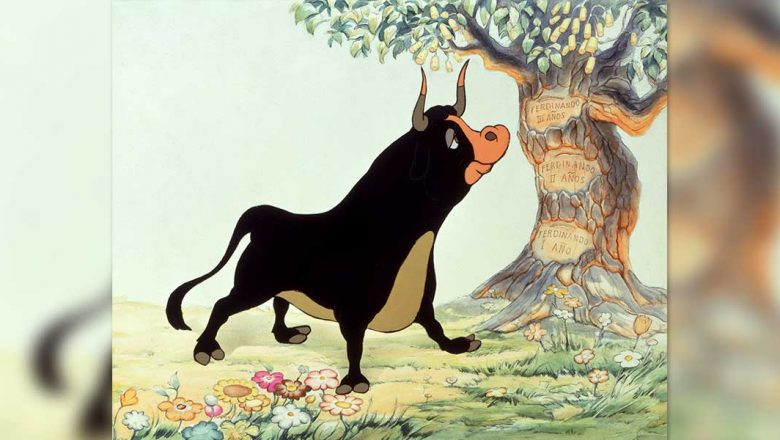
Ferdinand the Bull is a short film produced by Walt Disney and brought into the cinema in 25th November, 1938 which also won an Oscar for Best Animated Short Movie in 1938. Ferdinand’s Mother is voiced by Walt Disney himself and Ferdinand is voiced by animator Milt Kahl. The short film is narrated by Don Wilson. It is based on the 1936 published children’s book “The Story of Ferdinand”, on of the most successful children books of all times.

The plot started to talk about when Ferdinand was a cattle, unlike the other playful active cattle bulls who would jump around, bumping their head to each other, he just loved to sit under the shade of a tree quietly, smelling flowers. His mother suggested him to play with the other bulls but he refused and stated that he is happy in the way like this. Ferdinand grew up to be the biggest and strongest bull in the herd who still loved sitting down quietly and smelling flowers while the other bulls hoped to be the bull in a bullfight.

One day, five men came for a strong bull to be in the bullfight. While the other bulls showed off how tough they were, Ferdinand was still enjoying himself quietly under the shade. The five men were not satisfied to the bulls . Later, Ferdinand was stung by a bee. In a panic, Ferdinand was running through everything like if he was crazy. The five men were impressed by him so they took him to the bullfight.

The Banderilleros, the Picadores and the matador arrived to the arena. A lady gave the matador flowers. This led Ferdinand to run to him. Everyone was panicking and afraid but when the Ferdinand just sat down and smelled the flower, everyone was disappointed, the Banderilleros were mad, the Picadores were madder, and the matador was so especially mad. The matador tried so hard to make Ferdinand mad and fight with him but failed in the end. Ferdinand was sent back to his home. The animation ended with Ferdinand sitting on his favourite place, smelling flowers.

Major Post 8: Ragtime Bear

Ragtime bear is from UPA and was created in 1949. It was the first appearance of character Mr. Magoo, a nearly blind old man who enjoys peace and quiet. From the first scene Magoo’s personality is already introduced as we see him crash into the tree, which is soon explained by his poor eyesight as he tries to read the road sign in front of him. To show that his glasses magnify what he sees, Mr. Magoo’s eyes also grow larger when he wears them. He is stubborn and fully believes that he has everything under control although he decides to ask for help with reading the blurry sign. He believes that his nephew and everyone else are scatter-brained and don’t pay attention, which is ironic since Mr. Magoo is the one who is utterly confused.

The bear is shown as being oblivious to what is important to the people and only cares about Waldo’s banjo. When Waldo falls into the abyss, the bear reaches for the banjo instead of Waldo, letting him fall. Similarly, when Mr. Magoo falls off the stairs at Hodge Podge Lodge, the bear saves the banjo before it hits the ground but doesn’t catch Magoo.

Magoo is later fooled by his own weakness in believing that he has just shot his nephew. Upon realizing Waldo is alive, Magoo returns the banjo to him but still threatens to use the gun again, showing that his character has not developed much, as he’s still stubborn. Also, the bear hasn’t changed either, as he continues to play notes on the banjo, despite Magoo’s threatening to shoot at the next sound the instrument made.

Both the bear and Mr. Magoo are stubborn characters who want everything to go their way. They both face difficulty because of each other and neither change by the end of the story, which is not the norm with the character development I’ve seen in today’s animations.

Sydney McPherson

Major Post 05 – Tom and Jerry

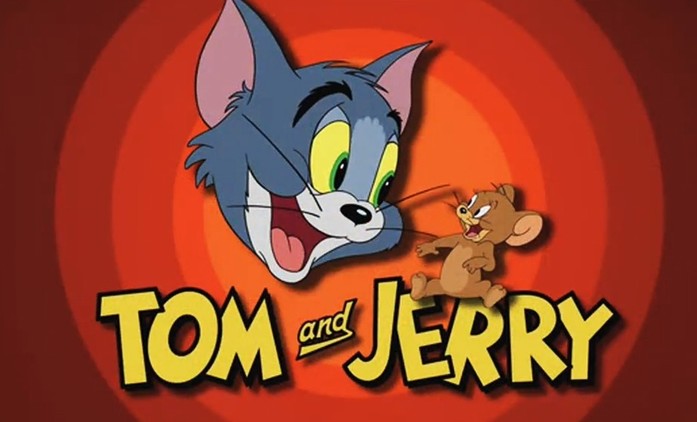
Though I like watching Disney’s animation and Looney Toons, Tom and Jerry is my favourite TV show since I was young. Same as the other two, Tom and Jerry is a animated series of comedy short films. It is created by William Hanna and Joseph Barbera in 1940 under the name of MGM cartoon studio. The main characters are Tom, the cat, and Jerry, the mouse. The shorts are mainly talking about the rivalry between them, inspired in real life at that time that cats were kept for catching mice. Each short usually center on Tom’s numerous attempts to catch Jerry and the mayhem and destruction that follows behind. The ending usually depicted Tom’s another failed attempt to catch Jerry because of Jerry’s cleverness, skilled abilities to escape and luck. However sometimes, the show depicted Tom and Jerry together to solve issues or have interactions with other characters, a friendship between Tom and Jerry sometimes being told too.

Not only the plots are fun to watch, the music plays a big role in the show too. The newer spin-offs of the show has less music and with more dialogues of the characters other than Tom and Jerry which I really don’t like about, probably because I lived my childhood with them not talking but it is just my personal opinion. The original show didn’t have too much dialogues in them. The whole show is driven by musics and sounds, like the most old animations we have watched in class. Even though it is an American show, as a kid, I could still understand what happened in general and enjoyed the laughter it gave to me. I am a grown-up now but whenever I get a chance to watch an episode again, it is still enjoyable to watch. I think this is a key as a successful cartoon : Never get bored and memorable.

Is Tom and Jerry your childhood cartoon show too?

Is it Always Right to Be Right? (1971) *continued*

Major post 8 By Victoria Courchesne

*Continued analysis from my major post 7*

 Bosustow challenges animation as a medium by creating the multi-media film using several different animation techniques. He successfully utilizes the 2 ½-D animation technique while incorporating live action clips among the animated sequences. What comes out of this application of multiple mediums into one short film is a period piece that seems to remain relevant throughout time. While his images depict an artistic symbolism of stereotypes from different movements, he manages to communicate clearly upon who the subjects are intended to be.

The film overall carries an ambition that can only be derived from an artistic origin. There is no superficial comedy nor does the style fit the mainstream animation design of the time. The film strives to be thought provoking without reservation in attempt to appease one group in particular. It is a call to the world to react and change.

            Bosustow’s final call to action reverberates as this “…the search for the truth is never over- that the challenge is always the same; to stop fighting long enough to listen to learn, to try new approaches, to seek and test new relationships, and to keep at a task that never ends”.

            The final image to close the film shows the words “Not The End”. And in that last remark, the message of the film is echoed to us that the fight is an unending one. Even in the year 2019,  almost 50 years after its release, we can still learn from the film.

Major Post 7: How a Mosquito Operates

I’ve written about Winsor McCay before, however I wanted to revisit another animation by him. McCay created “How a Mosquito Operates” in 1912. We discussed that McCay created comic strips before he did animation, and it really shows in how clean and precise his drawings are. Since he is first an illustrator, it is interesting to see how he turned drawings into animation. There is nice movement in the second scene as the man walk towards the door of his house. His dress drags behind him and there are wrinkles in the fabric to show the twisting of his body. McCay’s draftsmanship shines most when either the man or mosquito do any rotating motions. While they rotate, they stay exactly on model and the forms really seem round, which McCay achieved without any interior construction lines.

The design of the mosquito is hilariously large. It really adds a fun element to the animation starting from with first scene to see the scale in comparison to the man. I noticed that McCay uses looping animation and this “stuttering” where the animation will reverse and then continue several times. At first, I thought it looked strange, yet now the more I watch the animation, the more I enjoy the style and the overall look that the looping adds.

The man feels more like an illustration in motion while the mosquito, more like an animated character. It is less stiff and does some expressive movements with its legs and long nose. Lastly, I really like this animation because it is relatable. I have dealt with mosquitos pestering me while I try to sleep, and I’ve been in the man’s position. It feels like the mosquitos are never satisfied after one bite and it’s funny to see that experience translated into this animation with a ginormous mosquito.

Sydney McPherson