Major Post 12: Czech Animation

I thoroughly enjoyed watching the Czech Animations – a lot of them uses stop-motion and a variety of different objects, allowing for more experimental and unexpected movements.

Two, out of many, highlights:
Ruka the Hand (1965) by Jiri Trnka had heavy symbolization within its simple story plot. An interesting character – The Hand; represented many things, including the aspect of control. The message is relevant to everyone who has experienced some sort of control or manipulation, therefore, the audience would be able to relate to it.

Jan Švankmajer
Dimensions of Dialogue (1982) – looks at miscommunication, irresponsibility, inability to work together, and disagreements, portrayed in such a visually appealing way. It uses suitable pairings, such as a pencil and a pencil-sharpener or bread and butter, to help understand compatible communication, yet then starts mixing it up pairings (e.g. pencil-sharpener plus bread), giving us a visual image of what miscommunication looks like.
It is such a smart way to convey an issue we all experience, that I feel like people could learn, or at least be aware of their actions, from watching this.

Extra Class Notes:
Hermina Tyrlova – Czech director, animator, writer.
Ferda Mravenec
Jiri Trnka – Master of the wooden puppet style, was previously a famous illustrator.
Fyodor Khitruk – Russian Animator
Ostrov (1973)
Yuri Norshteyn – Russian Animator
Hedgehog in the Fog (1975)
Miyazaki mentioned his works to be one of his fave.

Major Post 11: Different forms of animation

Light and Shadow

This class we learnt about Alexandre Alexeieff who invented Pinscreen, which is a method that uses a lot of pins with different lengths in protrusion to create light and dark spaces. This technique allows for more flexibility in lighting and three-dimensional space – an aspect that requires more time in Cell Animation.

His works: The Nose (1963)
NFB: Mindscape (Pinscreen too)

Our second artist is Caroline Leaf – one of the earliest animators who used sand to animate. She had a low artistic background but during one of her art classes where her teacher asked them to bring stuff in, she brought in sand. Leaf carried on experimenting with sand and her technique has certainly inspired many more down the generation of artists – for example:

Which is sOO cool and expressive. I think similar to the Pinscreen technique – light and shadow and three dimensional space is something that’s achieved faster too.

The last artist that I will mention here is William Kentridge, a South African Artist, famous for his prints.
We had noticed in class, how most experimental animators have Fine Art backgrounds, and Kentridge is another example of that transition in professions.
His piece, Felix in Exile (1994) expresses social issues in his country, South Africa, and explores the physical and mental struggle of those times.
A rather uncanny source of his inspiration for his creations comes from using “other people’s pain as rare material” – Kentridge.
This stood out to me because at my first impression it sounded rather inappropriate and possibly insensitive, yet actually, with further thought, with appropriation perhaps the artists can portray it in a way that could be healing, or at the least, acknowledged.

In this video, he talks about how he uses charcoal because “you can change charcoal as quickly as your mind changes” pulling in the idea of spontaneity again; a mind-set similar to our previous artist, Norman McClaren.

Class notes:
William Kentridge
Felix in Exile (1994)
History of the Main complaint (1997)
Eyewash (1959) – Rober Breer
Fuji (1974)
Jake’s Professor – COMMUTER – Matt Patterson
George Dunning – Yellow Submarine (1968) designed by Hienz Edelman
Also Founder of TVC in London.
Paul Driessen
The End of World in Four Season – multiple frames (like a comic book style) moving at the same time.
The Killing of an Egg (1977)
Frederic Back – Cel overlays. Colouring pencils on frosted cells.
Frederick Back – Crac (1981)

Major Post 13 – Go Nagai

After getting to know a little bit more about the history of Japanese Animation. I just have to mention one of my favorite people in the manga and anime industry.

Kiyoshi Nagai was born September 6, 1945 and goes by the pen name Go Nagai. He is a manga author and has been a great influence to both manga and anime. He effectively pioneered their most representative genres, such as the Super Robot genre, Magical Girl Warrior genre, and the Horror genre. As a child, he was influenced by the work of Gustave Dore (Particularly the Japanese version of the Divine Comedy) and Osamu Tezuka. He dropped out of college because he fell ill and him being aware of his own mortality, he wanted to leave evidence that he lived. So he decided to pursue being a manga artist.

His most notable works are Mazinger Z (1972), Cutie Honey (1973), and Devilman (1972). He is known for intentionally breaking taboos. This caused him and his earlier works trouble with the PTA (Parent-Teacher Association). Most of his TV work have been fairly safe. Him and his work continues to be recognized till this day especially with the newest Devilman reboot releasing on Netflix named Devilman Crybaby.

Major Post 12 – Chinese Animation

For this class, Chinese animation was introduced. It featured a lot of beautiful films and I’m glad I got to learn the history of it. There are so many other films I never got to see till now. The films were elegantly animated and it really felt like the culmination of the creativity artists had at that time. I got to do further research so I could fully understand the history of the country’s animation.

The Wan Brothers played a crucial part in the animation industry in China. They would remain one of the most renowned animators. In 1956, the government introduced the Hundred Flowers Campaign which was to “let a hundred flowers bloom in the field of culture.” This caused an influx of all of China’s artistics fields, which included animation. The country’s most unique visual styles were paper-cut animation, folded paper animation, and ink-wash animation.

The films that featured each of those technique were Piggy Eats Watermelon (1958), A Clever Duckling (1960), and The Buffalo Boy’s Flute (1963) respectively. Te Wei was the one who developed the Chinese Ink-wash animation and helped create one of the said films above. The Wan Brothers would come back and release their film Uproar in Heaven (1964) which was based on the novel Journey to the West. This film was full of vibrant colors and fluid animation. It was highly praised just for it.

Julia Reymundo

Major Post 11 – Jack Stauber

The art of metaphor and the animations that was shown during that class was very interesting. Aside from the intriguing storylines, it is accompanied by really beautiful animations that help convey the story a lot more. Although the styles may be different, this kind of reminded me of the musician Jack Stauber.

Jack Stauber is an American Avant-Pop musician and visual artist. His works feature animation, live action, and makes use of obsolete media. He does most of the vocals and voice acting for all of his media. His most notable albums include Pop Food (2017), HiLo (2018), and Micropop (2019). He also goes by Jack Stauber’s Micropop.

He creates shorts and music videos and he has an iconic style of design for characters and its overall feel. He specializes in 2D & 3D animation and claymation. His main medium for 2D animation is MS Paint. He would feature all of these techniques into his music videos. Each video feels like a distortion of reality. Everything feels experimental. There is no concrete message from these works, it really is how you interprate it.

Julia Reymundo

Major Post 10 – Pinscreen Animation’s Modern Day Equivalent

It was cool seeing another unique technique to create animation. I was really interested in the Pinscreen and the films that were created using it. This was invented by Alexandre Alexeieff. It is a small metal frame that holds thousands of movable pins in small tubes. Each pin that sticks out casts a shadow. When these pins are placed strategically, it creates an image.

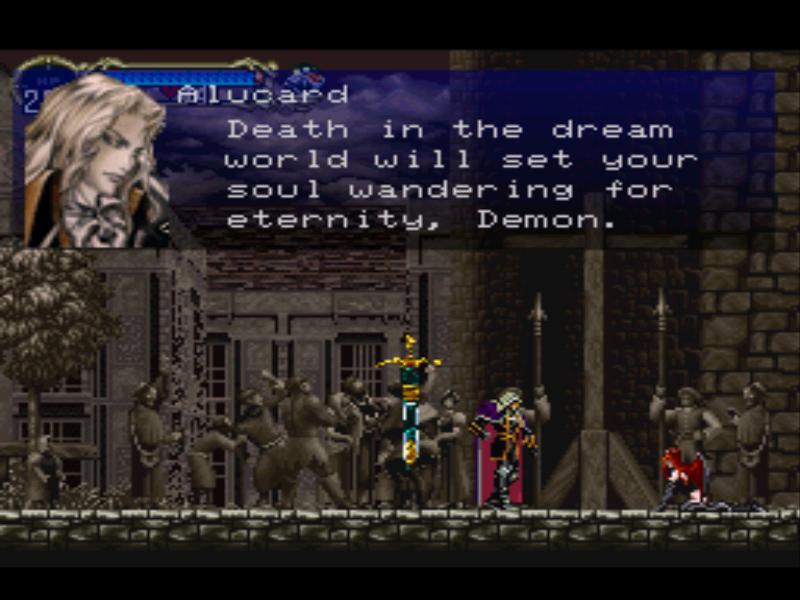
This technique is not used that much nowadays, but I would guess that the modern equivalent to it would be pixel animation. Here is a music video for the song “White Flag” by Delta Heavy. I noticed it had a very similar motion comparing it to the works of alexander Alexeieff. Though they are different in style, the thought and execution is simalar. Especially with everything feeling “dotted” or “linear.”

This style was popularized by the rise of video games from the 80s. The earliest video games would be pixelated due to the processor only being able to output a limited number of colors at once. Nowadays we are now able to process a lot of colors due to the advancement in technology. Which allows current pixellated video games and animations like the music video above to be created.

Related image
Castlevania: Symphony of the Night

Julia Reymundo

Major Post 9 – Stop-motion Animation Studios

It was great to see the small beginnings of stop-motion animation using puppets. Earliest forms of it realeased around 1899 and it continued to developed even further as time passed. Not only was it used purely for animation, this technique would also be featured in live action films as well. Most notable films that made use of this was The Lost World (1925) and King Kong (1933). Nowadays, there are companies who specialize in this type of animation production. Two of the more popular studios are Aardman Animations and Laika Animation Studios.

Aardman Animations was founded in 1972 and is most well-known for their animated shorts featuring the adventures of Wallace and Gromit. Some of their most notable films are Chicken Run (2000), Wallace & Gromit: The Curse of the Were-Rabbit (2005), and Flushed Away (2006). They are also known for the children’s cartoon series Shaun the Sheep (2007). During their earlier years they formed a partnership with Dreamworks Animation. They helped them create the films listed above, however, after the box-office reception of Flushed Away Dreamwork’s decided to end their partnership. This was despite the film receiving a nomination for the BAFTA award for Best Animated Film.

Laika Studios was founded back in 2005 and they specialize in feature films, commercial content for all media, music videos, and short films. Their most notable films include Coraline (2009), Paranorman (2012), The Boxtrolls (2014), Kubo and the Two Strings (2016), and Missing Link (2019). Their films have received nominations and awards from different ceremonies. They’re known to show their meticulous process to the public. Seeing their process and then the final outcome must be very fulfilling for them.

It’s great to see the development of this technique throughout the years and I hope that it continues on and evolves even further.

Julia Reymundo

Major Post 11: The Street

In class 12, we focused on some animations that were created using inventive techniques. One film was The Street created by Caroline Leaf in 1976. It’s an adaptation of a short story by Mordecai Richler that he wrote sometime around 1969. The story tells of a little boy whose grandmother was sick. He was promised to receive her bedroom once she passed away, yet almost three years went by before she died.

On Caroline Leaf’s website she talks about her setup for creating films like The Street. The film was animated using paint on glass. She worked in a dark room that had top-down lighting, using gouache and watercolors as her paints. She added glycerin to her paints so that they wouldn’t dry, giving her more working time. Leaf painted her drawings on the glass surface and used a wet cloth to wipe away the old drawings and continued until the film was complete.

This technique reminded me of a film we watched in class one, called “The Bigger Picture” by Daisy Jacobs. I wonder if Jacobs was inspired by artists like Caroline Leaf, as Jacobs film was created by painting and repainting drawings on the walls of the film set. Both films feature dynamic camera movement as transitions between scenes. In The Street, drawings will swirl together and unfurl into the next image. In one scene, the mother is stirring something in a bowl and the bowl transforms into the son’s face, revealing the mother’s spoon is now a brush that she is using on the son’s hair.

I really enjoy the use of the paint as a storytelling technique and that Caroline Leaf worked with the messy aspect of paint and used it to her advantage in this film.

Sydney McPherson

“Direct Animation”. Caroline Leaf, http://carolineleaf.com/direct_animation.php.

MJP 11: Chinese animation

During class we had learnt about the development of Chinese animations. In the last century, artists was greatly supported and sponsored by the Chinese government so that they could successfully learn from US animations and started creating some local creation with Chinese traditional elements such as the plot and art style. “Monkey King” is a household name in China as a traditional fairy tale character and the story about his journeys is always a common theme for Chinese animations. Other than that, Chinese ink wash painting was used in animation at that time as a unique art style of China. I like that style very much and “Little Tadpoles Look for Their Mom” is my favourite film. The animals are really cute at that short and the ink wash painting looks stunning. When I was young, I had learnt about Chinese traditional painting and calligraphy for a long time and I never imagine we can use it in animation. People at that time were really ambitious and capable!

I guess cultural revolution is always a disgusting history to me as a Hong Kong people since I know that China used to be such a strong country in many culture aspect and creative field. It is definitely a sad thing to hear cultural revolution occurred and ruined all those good stuff.

Hazel Wong

Major Post 10: pinscreen

Pinscreen animation uses a screen filled with movable pins, which can be moved in or out of the screen by pressing an object. From the side, the screen is lit so the pinscast shadows. This method can create a wide range of different textures. In class, we had watched some pinscreen animations like “The Nose”(1963) and “A Night on Bald Mountain”. Although the story is kind of boring and creepy to me, I was very impressed by the sense of 3D in these films. It is no doubt that the artistry of the pinscreen animation is amazing. But you can also imagine that the making progress is tough and time consuming! It looks cool but also really hard to achieve. That’s why pinscreen animation is no longer a common way for animation in the industry. Maybe today we can use 3D printing to simplify the making progress, but there are so many digital methods which is a lot more convenient than making a pinscreen.

Hazel Wong