Major Post 7: How a Mosquito Operates

I’ve written about Winsor McCay before, however I wanted to revisit another animation by him. McCay created “How a Mosquito Operates” in 1912. We discussed that McCay created comic strips before he did animation, and it really shows in how clean and precise his drawings are. Since he is first an illustrator, it is interesting to see how he turned drawings into animation. There is nice movement in the second scene as the man walk towards the door of his house. His dress drags behind him and there are wrinkles in the fabric to show the twisting of his body. McCay’s draftsmanship shines most when either the man or mosquito do any rotating motions. While they rotate, they stay exactly on model and the forms really seem round, which McCay achieved without any interior construction lines.

The design of the mosquito is hilariously large. It really adds a fun element to the animation starting from with first scene to see the scale in comparison to the man. I noticed that McCay uses looping animation and this “stuttering” where the animation will reverse and then continue several times. At first, I thought it looked strange, yet now the more I watch the animation, the more I enjoy the style and the overall look that the looping adds.

The man feels more like an illustration in motion while the mosquito, more like an animated character. It is less stiff and does some expressive movements with its legs and long nose. Lastly, I really like this animation because it is relatable. I have dealt with mosquitos pestering me while I try to sleep, and I’ve been in the man’s position. It feels like the mosquitos are never satisfied after one bite and it’s funny to see that experience translated into this animation with a ginormous mosquito.

Sydney McPherson

Major Post 04 – Nick Park

Nick Park is an English animator, director and a writer. His famous works are stop motion animation : Wallace and Gromit, Creature Comforts and Shaun the Sheep. He also won a lot of Academy Award with Creature Comforts, The Wrong Trousers, A Close Shave and Wallace and Gromit: The Curse of the Were-Rabbit. He also received five BAFTA Awards, including one award for Best Short Animation for A Matter of Loaf and Death.

I found Creature Comforts the most interesting one. It is one of the stop motion clay animation made by Nick Park in 1989. They are animated comedy shorts. Basically, the studio will go interview some non-actors questions. The answers they have will be put into animals and match to the lip syc so it gives a feeling that the creatures are taking an interview from us. They have a lot of new versions of this series. The original and the first one of Creature Comforts is an interview to the animals from a zoo, talking about their current home conditions. The non actors were interviewed to talk about their home conditions. They are the residents of both a housing estate and old people’s home. After recording the voices, Nick started to fit the voices into different animals so the short animation is created.

They have a youtube channel for the new series of Creature Comforts. It is sometimes pretty sad and cute. They are very stylized, very easy to recognize.

“Is it Always Right to be Right?”

Major Post 7 By Victoria Courchesne

            **For sake of word overload- I split this analysis into two parts, the second part will continue in my Major post 8.**

            Before reading the post, I implore you to watch the animated short Is it Always Right to Be Right? (1971) along with my previous blog post #6.

            In this post I will discuss the short in an analysis and my overall opinion on the piece created by Stephen Bosustow studios. The 8 minute short features narration done by Orson Wells and discusses a divided world where everyone thinks they are right. The film mainly features the two sides, the “old” and the “young”. The “young” seem to represent different movements within the late 1900’s in America, such as the peace& love movement and the civil rights movement. The “old” seems to represent the people in power at the time of those movements, such as the government, certain political figures, and large corporations. The style of the animation in the film is a loose, sketchy style, fitting well with the blend of the various live action television shots Stephen incorporates. He also breaks the narration with cuts of sound clips that apply to each side. The sides continue to divide until the turning point of the film upon which the film introduces a question “But what if I’m wrong”. The film’s division seems to unravel itself from there, concluding that both “sides” could come together to find their common ground and be responsible for creating a better world. 

Continue by reading my major post 8.

Major Post 08 – Pixelation Animation

Pixilation is a style of animation that is very similar to stop motion. It using people instead of puppets. Actors gradually make different actions, and they can not follow the normal physical rules when making, showing many more interesting ideas.

Neighbours(1952 film) shown in class are an example. It is a story about two men live peacefully in adjacent cardboard houses. When a flower blooms between their houses, they fight each other to the death over the ownership of the single small flower. In the movie, white fences are used as weapons to hurt each other. Eventually, they were surrounded the two men’s graves and even turned into crosses laid flat on the graves.

The movie only uses these very simple props, but through different placement and use methods, it has produced different effects. I think it’s very successful.

When making Pixilation animation, I think we should also think about whether ordinary props, which are very common at ordinary times, can show different feelings under narrative and shooting techniques.

The life of dear Stephen Bosustow

Major Post 6 By Victoria Courchesne

Stephen Bosustow, heard of him? How about how he helped Ub Iwerks form the UPA studios, producing many of the Mr.Magoo shorts that would become Oscar winners? Ah, now you are remembering! Well sit back, relax, and read on while I give you a deeper insight to the life of the animator known as Stephen Bosustow. Born on November 6, 1911, Stephen’s friendship with Ub began early on in the 1930’s when he worked on Ub’s film “Flip the Frog”. That friendship could be what brought Stephen to the Disney animation studios in 1934 where he worked for 7 years. The next events should be familiar to you; Stephen and many other animators walk out on Disney in 1941 and he, Ub Iwerks, and several other animators founded the United Productions of America (UPA). While he was a producer at UPA, Stephen oversaw 43 Mr. Magoo shorts, winning him 3 Oscars and several award nominations. His career with the UPA halted after the company was sold in the early 1960’s and Stephen then went on to form a production studio of his own. “Stephen Bosustow Productions” featured mainly educational-based shorts. The short Is it Always Right to Be Right? (1971) won a Oscar for Best Short Film in 1970. In my next post, I will discuss the film in an analysis.

I picked Stephen as a topic to write on because he was born in Victoria Canada.

Sources:

https://www.thecanadianencyclopedia.ca/en/article/stephen-bosustow

https://collections.new.oscars.org/Details/People/9241

https://www.imdb.com/name/nm0098322/

https://archive.macleans.ca/article/1957/12/7/the-silly-splendid-world-of-stephen-bosustow

Major Post 07-Visual Music

Painting and music have distinct similarities. They also have melody and rhythm, expressing rich inner feelings. What music can reflect, art works can also reflect, and even more intense color can be used to guide the audience. Visual music artists use the method of creating music to pursue the appeal of music in painting, thus completing the creation of visual music.

The main elements of visual music, such as points, lines, planes and colors, should have special aesthetic meanings, including unique appeal and plot. This is an abstract visual experience beyond the literary language.

In a visual music video presented in class, the professor joked that the white lines on the picture dancing with the rhythm were like dancing cigarettes, which impressed me deeply.

I think that simple and pleasant lines can well interpret the music with a pleasant rhythm. If I were to do a visual music work, I would be happy to use a lot of lines to complete it. Because this is a very smart and effective method, but also can create a successful visual effect.

major post 08: Neighbours

During class we watched some pixilation animation before starting our next project. “Neighbours” is a pretty cool one made in the earily age 1952. When I watched the clip, I laughed a lot and enjoy it very much. It involved tons of crazy thoughts and dramatic performance such as the fences fight or the makeup on the men’s faces at the last few minutes. I really wonder about how they made the film since some imaginary sense like two men floating in air looks pretty hard to complete (the actors had to jump really high otherwise they need a special camera angel?). Those creative elements made the film really entertaining and hilarious.

Then I googled more information about the film and surprisingly found that is actually an anti-war film! The eight-minute film was politically motivated and inspired by Mao’s revolution in China and the Korean war. I guess that’s why the artist made the film title in various languages! This reminded me political issues is always around us and about us. I am very impressed that the artist made such an educational animation with such a fun and crazy way to convey.

Hazel Wong

Major Post 8 – The Mad Doctor

As I mentioned in the previous post, I had also watched another Mickey Mouse short, The Mad Doctor. It was in a horror tone (is Halloween month HAHAHAHAHA Trick or Treat!!!!), about a mad scientist who kidnapped Pluto and Mickey came to save him.

The story was quite simple, but the animators still illustrated it really well. It is in black and white, but still having fantastic shading and lighting effects, helping at times to give some depth to Mickey’s design as he enters the Mad Doctor’s castle. The door lock scene is the same as another horror short, The Haunted House, which the door locked by itself after Mickey entered the House.

I loved the skeleton tricking Mickey the most, reminding me of the Skeleton dance watched in class. The Skeletons are playful and I laughed when watching it (Although it was a horror :D).

It was terrifying when I saw Mickey was also get caught and nearly been killed by a large saw. But at last it ended in a heartwarming way that I enjoyed to see.

Major Post 06- Disney’s Characters

We watched a lot of Disney movies in class. Before that, I didn’t know much about the popular characters in the early black and white animation. Now I know more of Disney’s classic characters and how they created.

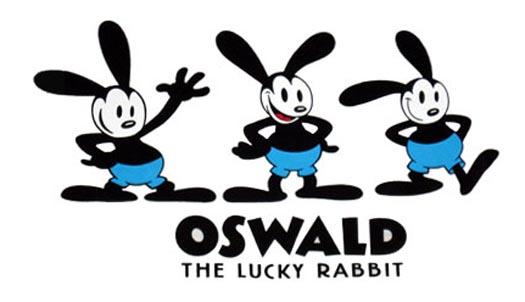
Disney was founded by Walt Disney in 1926, when they created a character, hoping that he would become the protagonist of animation, and that he would bring good luck to the company. This character is not Mickey Mouse, but Oswald the lucky rabbit. But the character was stripped of copyright by Universal studios in 1928, and Walt Disney lost a lot of good animators.

After Walt Disney understood the importance of copyright, Walt Disney once again created a new animated character, which appeared in the movie Steamboat Willie on November 18, 1928. This character is Mickey Mouse, which we are familiar with.

From 1928 to 1947, Mickey Mouse was voiced by Walt Disney himself, and Mickey Mouse became the first cartoon character to have an exclusive location on Hollywood Star Avenue.

Anyone who has seen Disney Mickey Mouse animation will find that the characters have only four fingers, and according to Disney’s official explanation, they think that a mouse has five fingers is a little too many and looks strange.

On the other hand, because of budgetary considerations, if it took 45,000 compositions to make a half-and-a-half animation, it would save the company a lot of time and budget if it spent less than one finger, so Mickey had only four fingers left.

Major Post 7 – The Karnival Kid

In this weekend, I had watched two Mickey Mouse short, The Mad Doctor and The Karnival Kid. Both of the shorts are black and white but I enjoyed watching them.
In the Karnival Kid, I am impressed by listening the first Mickey Mouse line ‘Hot Dogs! Hot Dogs’ voiced by Walt Disney. I felt a little familiar in the start of the film when a cow walks away from the camera, similiar strategy has been applied in the animated short, Plane Crazy.

It is impressing to watch this short, including how the hot dog was given a personality and two cats singing in the last scene. I can see the Mickey Mouse in this short was slightly different and the atmosphere of the whole animation was not really consistent with the style and personality of Mickey and Disney later output. This can show the graduating improvement and optimisation of the character Mickey Mouse.