Major Post 3: Reiniger

             When we think of famous animators I bet we all jump talented and influential names like Don Bluth, Walk Disney, Glen Kean, James Baxter, and of course Richard Williams. But I doubt you can name as many female animators. I always knew there were women working in the animation industry way back in the 20s but I never saw them doing more than just coloring cells or painting backgrounds. So, when the Professor mentioned a female animator who wasn’t just a names-less colorist but a creator with full artistic responsibility over an animation I perked up.

             This woman was none other than Lotte Reiniger. A German woman who fled Nazi Germany for the safety of England in the 1935. She was an artist fully influenced by pre-WWII Berlin Germany. She was credited for making and contributing over sixty films in her life time but she was best known for her pioneering silhouette animations. Examples of her work are found in films like The Adventures of Prince Achmed and The Beautiful Princess of China and The Lost Shadow. Although, her works were awe-inspiring and critically acclaimed by audiences she had difficulty getting funding for her projects through most of her career. So, in order to fund her projects she worked for Julius Pinschewer, an early producer of advertising. It is said that two of the four ads she created for them have survived to this day (one of which I included a link to below).

             In the end, learning about Reiniger and all the hard work she put into her craft was inspiring and made me wonder how many other unknown female pioneers of animation are there out there.

LeAnn Schmitt

Project 1-WIP 1-Pre-production and Production

For our first project, Julia Reymundo and I will be doing a stop-motion animation about making a peanut butter and jelly sandwich. To keep it simple there are no elaborate sets or people in the shots. ( I have a hand cameo but that’s it) We drew most of our inspiration from the Haunted Hotel By James Stuart Blackton and the idea that the objects were able to move independently with what looked like no human intervention.

There was not a lot of pre-production work since we settled on the concept very quickly due to its simplicity. Most of our time went into spit balling ideas on what camera we could use and how we were going to get nice angles without a tripod. We decided we would be using an ipad and a free stop-motion software that I found in the app store. For post production we plan on putting the exported film into Premiere and enhancing the movement of the objects with sounds and background music.

During production we had to get rather creative when it came to shooting since we were in a cramped kitchen trying to get dynamic shots of a peanut butter and jelly sandwich. We ended up using a bowl, a drying rack, and even a rice cooker as our makeshift tripods. It was a fun experience.

LeAnn Schmitt and Julia Reymundo

Major Post 3: Reiniger and Bartosch in Cutout Animation

Lotte Reiniger and Berthold Bartosch are two of the most representative figures in cutout animation. The two, who were friends and colleagues, used cutout animation to present films with two very different themes and moods showing the diversity of ideas that cutout animation, and therefore animation by extension, can portray.

Reiniger’s film, The Adventures of Prince Achmed (1926), the first full length feature animation that remains intact in its full version, displays how expressive and elaborate cutout animation can be in portraying characters and their movements and emotions while maintaining a full narrative. By limiting dialogue to only the important interactions revealing information crucial to the story, the audience is able to focus more on the visual aspect of the film and the expressions of the characters that push the story forward.

On the other hand, Bartosch’s The Idea (1932) pushes the dialogue of metaphors and ideas set in motifs further. Bartosch uses his experience from working with visual effects on The Adventures of Prince Achmed to even further develop the different special effects used to portray smoke, fog, and light to reflect the intensity of the film in which Idea portrayed as a woman oppressed by capitalism in individuals and in society. Bartosch also uses a very specific aesthetic with blocky figures and diverse line weight to reflect the woodcut prints of the novel-without-words The Idea (1924) by Frans Masereel, on which the film was based upon.

Eunhae Mary Park

major post 01

It was the first week of our animation history class. Before the classes, I am not familiar with animation history. All I known was phenakistiscop and little something about early Disney.

I think the one who invent Theatre Optique is very intelligence and brave. He was doing something extremely new and difficult at that time which is involved both artistic and scientific aspect. He is definitely a hardworking and patient genius. I was a bit shocked to see him spent so much time and enthusiastic to develop skills and technology, something so bold, which was never tried before. He is definitely one of the greatest man in human history! Without him, we probably will not have so many great movies in our world.

For the early animation we had watch, I found that soundtrack, picture resolution and dialogues are really important. Honestly I couldn’t enjoy those film without these element I mentioned. But I think “Gertie the Dinosaur” is a great one! Gertie is pretty cute, the performance and the conversations are very entertaining.

By the way it was difficult to memorise so many foreigner’s name but I will try to do it more.

Project 1 – WIP Post 1 – Pre-production

For Project 1: Object Animation, Victoria and I will be making a short stop-motion animation. The animation will only include one character to keep the animation simplistic, minimal, and short.

Plot: The main character, a barbie doll, wakes up from her sleep and takes off her eye mask. She then applies make-up on her face while looking in the mirror While she does this, a ‘poof’ of smoke will appear. And when the smoke from the ‘poof’ fades, in place of the doll will be a real girl standing with the same make-up tools in her hand.

The shots will be taken with an iPhone. The shots will be composited using after effects as we are considering using computer effects for the ‘poof’.

Like how Koko the Clown interacts with the live-action actors in Out of the Inkwell (1921) by Max and Dave Fleischer by leaving the paper and hiding behind props, the doll in this clip will interact with the real world by transforming into a real person.

Victoria Courchesne
Eunhae Mary Park

Major Blog Post 2: Commercialization of Animation

The techniques developed in the early 1900’s with the birth of the commercialization of cartoons puts into perspective how time and labor consuming the animation industry really was (and still is). The first ‘cartoons’, or performances, by animators (such as by Winsor McCay and even Max and Dave Fleischer’s Koko the Clown) can be seen to largely be drawn by one person as the content of the animation is not as much story as it is simply entertainment for the audience.

As the need for animation evolved, however, from performances to cartoon with more storylines and plots derived mainly from comics, the production line can also be seen to have evolved. The production line evolved from an individual to labor system to accommodate for the large and sudden demand for regular cartoons series and therefore a rise in need for more efficiency in the production process. This evolution, I think, is also because of the large technological advancements that occurred with color film and materials and technology used during production process itself such as rotographing.

Eunhae Mary Park

Major Post 1: Daisy Jacobs & Stop Motion

In class one, we discussed several films that were created using stop motion techniques. One film I really enjoyed was “The Bigger Picture” by Daisy Jacobs. The artists mainly animated the characters by painting them on the walls of the set and taking many pictures of the paintings. In the first scene, Richard drives up to the house in his car. Considering that this was animated using paint on a flat surface, the finished product is quite dimensional. They used the elements of scale and value to create the look of the car growing as it drives down the hill.

The artists also used three-dimensional props made from paper mache. Whenever the bodies of the two-dimensional characters extended away from the wall, there was a paper mache prop to create that illusion. An example of this is also in the first scene when Nick picks up the teapot. Another interesting aspect is how the artists animated water. When the boiling water is poured, they animated the paint to imitate water. In a later scene, Nick again pours a cup of tea, but this time three-dimensional transparent plastic is used.

There are many more interesting elements in this animated film; all of which help add to the overall mood. I’m looking forward to watching more of Daisy Jacobs’ work.

Sydney McPherson

Major post 2: Betty Boop

Today’s lectures revolved around the cartoons of the 1920s and the impact of Max Fleischer in the animation industry. He introduced a wide array of characters that are as memorable as Mickey Mouse himself. Some of these characters include: Popeye, Bimbo the dog, Koko the clown, and the subject of my post, Betty Boop.

Now, the Betty Boop we know is a bit different from the one made back in the 1930s. While she is still depicted as a baby voiced caricature of a flapper girl on the outside, a lot of her sexual undertones and outspokenness against the old morals of previous generations have long since been expunged from her personality. The sex symbol was criticized by parents due to the message she was sending to their impressionable children. So, with the uproar of parents and the passing of the Hay’s Law, Betty Boop’s risky attitude was watered down. This code was a restriction adopted in 1934 that stifled American cinema and called for harsh censorship of all entertainment in the United States. Due to this censorship, Betty Boop went from being the rebellious sexual fully realized woman to being depicted as a much demurer working girl.

LeAnn Schmitt

Major Post 01

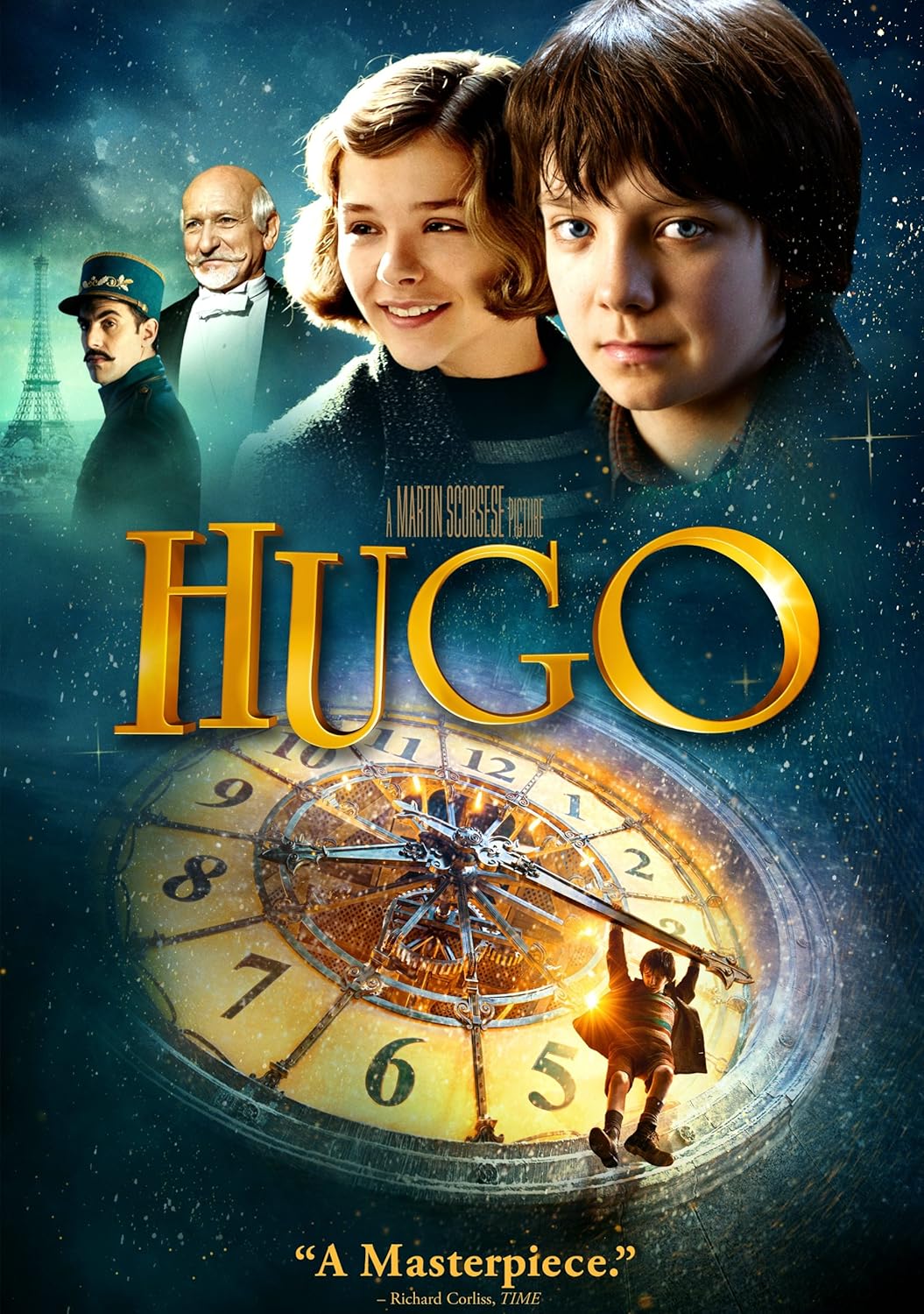
A long time ago, I saw a clip of A Trip To The Moon showing on the TV. Later I found that the movie name was named Hugo. It caught my interest but that was the semi-ending part of the movie so I went ahead to watch this again on my computer. Until recently, I knew my mistake on thinking that A Trip To The Moon was just a part of the movie Hugo, it was a stand-alone animation from the old times, one of the very first animation.

Hugo is a historical adventure drama film, directed and produced by Martin Scorsese. The story is talking about a boy who lived in the Gare Montparnasse railway station in Paris in the 1930s. His clockmaker father found a broken automaton at the museum. He and Hugo tried to repair it, documenting everything about it in a notebook. Unfortunately his father died in a fire. Hugo continued to repair the automaton, believing it contained a message from his father. The final piece he needed was a heart-shaped key. In the station, he met Isabelle who would like to go on an adventure with Hugo and later was found wearing a heart-shaped key. When the automaton activated, it drew a famous scene of A Trip To The Moon, reviewing that Isabelle’s godfather, Georges Méliès was a film maker but gave up after the effect of WW1. Hugo and Isabelle went on a quest to hopefully find a way to invigorate Georges.

Hugo film

Major Post 1: Development of Animation as an Art Form

The view of animation as a medium for film took longer than one might expect. This was unexpected to me because animation can be seen to actually be the fundamentals of film; capturing movement, or giving an image the illusion of movement, by taking a series of photographs with the subject moving slightly between each photograph.

The transition of the use of animation in film from trick shots into moving drawings occurred, I believe, is because of appropriation. This is because no artist at the time simply came up with the concept of drawing a character and making it move, but often times copied other artists’ work and changed it to make it their own by incorporating their own ideas into an existing. This is the primary reason for more than one ‘Haunted House’ films (James Stuart Blackton’s film being built on top of other films of a similar story) and several performances of different artists interacting with their own moving pictures (such as Emile Cohl and Winsor McCay). Because these artists made constant changes to different animating techniques that already existed or was, for them, recently discovered, the form of animation evolved very quickly during the late 19th century up to World War I.

Eunhae Mary Park