MP8 | Depictions of race in American animation

Although it should rather be investigated in relation to racism in cinema and art as a whole, I think the numerous racist caricatures in the works we’ve seen in class are still worth looking at on their own. As far back as Winsor McCay’s Little Nemo (1911), racial and cultural minorities in the United States in our screening list have been used as comic relief. In Little Nemo (1911), a clown and a black man (in what appears to be “African” attire…) are manipulated and stretched like funhouse mirrors by the titular boy hero Nemo. The equation of a clown character and a black characrer is not in such good taste, especially when being distorted at the whim of the presumably white protagonist.

The Golden Age of Animation especially had a lot of racist depictions of minorities. The stereotypical single-braided “Chinaman” appeared in Felix the Cat’s Oceantics 1930, and then again in the Porky Pig short Gold Diggers of ’49 (1935). In the latter the offense is quite outrageous, as soot from the protagonist’s car covers the Chinamen and they transform into black characters (i.e. minorities are all the same…).

The character Bosko by Universal Studios duo Hugh Harman and Rudy Ising is something of a mixed message. The design is most definitely some kind of caricature of a black person, but with the gigantic white patch on his face, he looks somewhat animal-like (which is quite demeaning). He is clearly a protagonist in his films; successfully wooing a girl in Hold Anything (1930) and being a soldier in the wartime Bosko the Doughboy (1931) saving his fellow trooper. But his design points and the kind of slapstick that he acts out are rather crass.

The only film directly addressing racial and cultural difference — and not exploiting it for humor — was UPA’s educational short against racial prejudice Brotherhood of Man (1945), and I’ll use it as a happier bookend to this post listing all the reflections of a more racist society of the past that we would rather forget, that is still not wholly gone in the present. It perhaps indicates a change in the social consciousness, but is a little ironic considering so much distasteful caricatures and imagery was shown in animation.

Major Post 9: Isle of Dogs

Today in class we learned about puppet animations and the uncanny valley is has carved into the animation world. Many amazing companies such as Laika (the creators of Box Trolls and Paranorman) and Tim Burton’s Studios (creators of Nightmare Before Christmas and the Corpse Bride) have made leaps and bounds in this type of animation.

In class we saw many beautiful and heavy animations that were produced outside of the two companies mentioned before. One that stuck with me was Barry Purves, Screen Play. This piece reminded me a lot of Wes Anderson’s Isle of Dogs. Not only because of the Japanese setting and theme but its dark, creative storytelling, and unsettling style. Upon further research into the creation of Isle of Dogs, I found out that 1,000 individual puppets were made for the production with an even split between 500 dogs and 500 humans. The human puppets were made of resin to achieve a warmer translucent skin (this technique was later used in Laika’s Paranorman). The rougher animation style was accomplished by shooting the whole film on twos.

I got the pleasure to see a handful of these puppets and some of the sets when they were on display in the museum on the Savannah Campus and I can say that I was blown away. It was so surreal to see these lively characters sitting still. It was almost as if I was waiting for them to spring to life. Linked below is a video of how the puppets were made.

LeAnn Schmitt

Major Post 8: Composition of Movement

We looked at a lot of Experimental Animators this class:

Jules Engel worked in Fantasia – UPA – Paris –
Founder of the Experimental Animation Program, CalArts.
He was exploring an abstract or a commercial path.

Mary Ellen Bute worked with no camera, she drew directly on the frames of the film – which is tiny. She was one of the first female experimental filmmakers and believed that the general public would appreciate visual art as such, therefore convinced the Radio City Music Hall, NY, to screen her abstract films regularly, in the 1930s.

Her piece called Rhythm In Light (1934) was described as “a pioneer effort of new art form”, something to appreciate and respect. Her style consists of many geometric, 3D objects, as well as light being a major element, using reflections and refraction bounced off the prisms. These two features combined, along with her ‘mathematical system’ performed to create this piece, makes it visually very posh and refined.

In her next piece Escape, she introduces a more narrative production, with an orange triangle being the protagonist.
Other creations = Spook Sport (1939)

Len Lye (Leonard Charies Huia “Len” Lye from New York, was actually the first to use direct film, which stemmed from him being unable to afford a camera. I admire that story as he didn’t let lack of resources stop him from creating, instead it pushed him to think experimentally.

He is another example of a Fine artist transferring interest to being a film maker. This spurred when he moved to London and joined “Seven and Five Society”.

Len Lye’s other works include:
“The Colour Box”
“Rainbow Dance” (1936) – Silhouette performance. Bold, Entertaining, Colourful, Combined live-action
“Colour Cry” (1953)

Lastly, we looked at Norman McLaren from the GPO Film Unit.
Founder of animation in NFB (Canada, 1941 – now), a company that’s sponsoring still. He made Boogie Doodle (1940) – The music is digital and pixilated at the beginning, in fact, later on he inspired pixilation.


Some quotes of his, that stood out to me:
“Problem with making a surreal film is to be constantly improvising”

He talked about how surrealism is like drawing out of the subconscious and how his subconsciousness is a heavy source of artistic inspiration.

From my understanding, he says something along the lines of how surrealism is cutting down the conscious control when creating.
I love that because there’s a massive sense of freedom in being able to do that. We are taught to be planners, organisers which are all valid and needed, yet it’s refreshing to have a balance of being completely and utterly spontaneous – living in spur of the moment. As demonstrated in ‘Boogie Doodle’ (1940) and a bit in ‘Hen Hop’ (1942).


Fun Fact: McLaren stayed in a farm for long period of time when creating ‘Hen Hop’ – I want to do that too.

Blinkity Blank (1955) – McLaren moves into using finer lines and even more varied colours, compared to Hen Hop and Boogie Doodle.

Neighbours (1952) using pixilation technique.
People argued whether this should be counted as a documentary rather than an art piece as it uses a peculiar technique.

Class Notes:
We touched on how many curious artists move from, e.g. a painter or musician, into animation.
Comic -> Animation
Painter -> visual timeline to make a moving visual
Music -> Visual music
Disney -> commercial and experimental side

Abstract/Experimental VS Narrative
What’s the meaning of experimental animation (spirit of exploring, possibly quite bizarre, takes time to understand)

Major Post 08 – Cel Shading

In my own research of the movies before and now, I noticed that the old animated movies don’t have much shadings on the character. Background and props are usually painted in details. Disney movies for example, the characters don’t really have much shadings in them, the shadings are used when there’s an intense lighting or a way to show atmosphere of the scene. From Snow White to Princess and the Frog, the shades are either not used or very light in most of the time.

Disney studio are releasing 3D animation more often than 2D animation. I heard that is because 3D animation is more profitable than 2D animation. There’s a kind of shader in 3D programs has been developed in this 10 years – Cel-shading or Toon Shader. It is a very simple shader. It applies flat shadows onto the models, with the settings it provides, texture packs and lighting effects, a 3D animation is created quicker than before. This is why the number of production of 3D animation has significantly grown recently. Toon shader is inspired by the shades from old cartoons. This is a way to create consistent frames. Simple shading can tell stories and environment clearly, it can be drawn very easily too thus a convenient way to create consistented animations. Most of the cartoony animated films are made with toon shader but it is not visible due to the large amount of lighting, VFX and filters covered onto the scene.

Here is some examples of toon shader as you can see they are very simple and easy to render. Take Pokemon (pokemon go as well) as an example, they are the perfect example of toon shader. All of the pokemons are covered with simple shades am a little lighting.

Major Post 07 – Favourite Disney Princess Movie

When talking about Walt Disney Studio, Mickey Mouse is definitely the first one to come in mind with but other than Mickey Mouse, I am sure everyone got a childhood shared with classic princess movie too. The very first and successful movie is Snow White, that have showed a bit of its clip in class, Is Snow White your favourite one among all the princess movie that Disney has? If not, what is your favourite one?

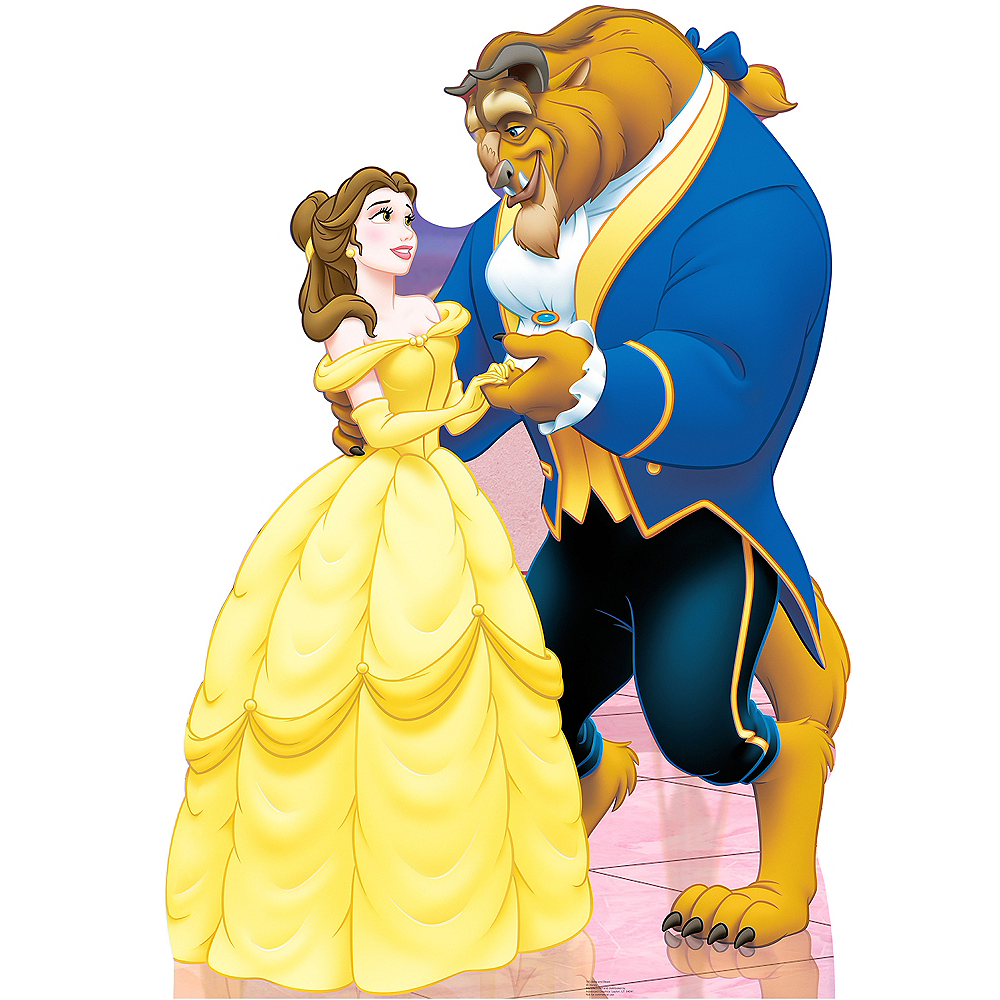
I don’t like Snow White because the story feels boring to me. Snow White is a very good movie at that time without computer animation but the story in general, I am not interested. My favourite movie is Beauty and the Beast. I love animals and monsters, also fantasy. I don’t like an ordinary romance so the story of Beauty and the Beast caught my interest the most since I was young until now. The live action one in 2017 is very well-done too, I almost teared for I found my childhood memories back when I was in the cinema.

The story of Beauty and the Beast is about the romance between Bella and Beast, who was originally a handsome prince, master of the castle. Beast was cursed for being a selfish and cruel prince he was. Beast imprisoned Bella’s father for stealing a rose from his garden for Bella. Bella then went out to look for her father. She offered to stay in the castle in returns of her father’s freedom. Thus the relationship in between began, Bella slowly turned Beast back to be a good prince that he should have been. The curse that Beast had can only broke by a kiss of true love so Beast tried to approach to Bella no matter how hard that is.

I just really adore the story. It is out of reality, this is why I love it. Reality is boring and fixed. Disney movies gave me an opportunities to step into their fantasy world, helping me to escape the stressful reality.

Major Post 8 – Pixilation

For this class, we’re also focusing on experimental animation. In addition to Visual Music, we now have another animation technique called Pixilation. One of the featured artists of the lecture was Norman McLaren who became a part of the National Film Board of Canada. Not only did he take part in creating visual music animation but he also experimented with Pixilation. His most notable animation was “Neighbours” (1952) that features two neighbors fighting over a flower in the most exaggerated way. The flower is a three dimentional object and is stop-motion animated as well.

Pixilation is a stop motion technique where instead of objects or puppets, live actors are used as the frame-by-frame subject instead. This would be done by repeatedly posing while a frame is being taken every time the pose slightly changes. This technique is used as a way to blend live actors with animated ones in movies.

An example of this in recent times is a project done by the Swiss artist named, Guillaume Reymond. This is a pixilation video depiction of the video game “Space Invaders.” This was for the “Belluard Bollwerk International” festival. The sound effects are all voice acted which gives it a similar atmosphere of McLaren’s work as well.

Julia Reymundo

Major Post 7 – US Gov. Films

For this class, it was focused on the UPA (United Productions of America), which was founded by Zach Schwarts, David Hilberman, and Stephen Bosustow in 1943 as the Industrial Film and Poster Service. The style of UPA films were to keep it simple in order to save money as this was during the animators strike. So backgrounds would feature no line art, only silhouettes.

There were a lot of war films that were mentioned in this class. Such as “Looney Tunes: Point Rationing of Foods” (US Gov. Film) (1943) and “Hell-Bent for Election” (1944) both directed by Chuck Jones for the United States government. I would also like to talk about this certain war film that was only shown to soldiers of the US Army. This animation that was also directed by Chuck Jones which was all about a gooft soldier named and titled “Private SNAFU.” SNAFU would stand for “Situation Normal: All Fouled Up.”

Take note that this is a product from its time, so it does have plenty of stereotypes and racism. Especialy in regards for Nazi Germany and Imperial Japan. These were created for US Soldiers, it was also exclusively shown to them, so all the references and imagery are very adult themed. However, the purpose of these films were to inform and educate the soldiers during WWII. Reading wasn’t a requirement to join the military so many were illiterate. This would be the easiest way to teach the military. A fun fact is that Dr. Seuss even wrote for this series. The video above is the episode that he wrote. This was also voiced by Mel Blanc who was best known for his role as Bugs Bunny.

Julia Reymundo

Major Post 6 – The Walt Disney Studio

For the sixth class, we learned about The Walt Disney Studio. The company was founded by the brothers Walt and Roy Disney. The did create different studios that would create their different animation. Walt was known to be a part of the “Kansas City Film Ad Company,” tbe “Laugh-O-Grams Studio” (1921), “Disney Brother’s Studio” with Roy Disney, and “Iwerks-Disney Commercial Artist with Ub Iwerks.

Ub Iwerks was Walt’s best friend and he did all the animation early on in the company. He also was a part of the creation process with Walt Disney to design the character Mickey Mouse. Iwerks was known for Steamboat Willie (1928), this was known as the first Disney cartoon to feature sound. Silly Symphonies started a few years after and one of them which was “Flowers and Trees” was the first animation to use the three-color Technicolor method. This was also known as “The Technicolor Process 4 camera.” This would conatin color filters, a beam splitter that would partially reflect the surface inside a split-cube prism, and three seperate rolls of black-and-white film. It would be in Red, Green, and Blue and negatives strip would be their complimentary color which was Cyan, Magenta, and Yellow respectively. Walt Disney was able to negotiate an exclusive contract to use the process until September 1935. The multiplane camera was also used during these times to create depth.

One of the videos we watched which was “Reason and Emotion” (1943) by Bill Robert, had reminded me of another animation with a similar story telling style. This was “The Story of Menstruation” (1946) which was produced by Walt Disney. This would inform girls all about menstruation at the time.

Major Post 5 – Mystical Visions

For the fifth day of class, it focused on abstract animation. It is also known as Visual Music. One notable animator was Oskar Fischinger, who built the foundation of this. Most of the animations that were produced followed all sorts of musical tracks. A wax-cutting machine would be used to create effects for these different films. Oskar Fischinger would be influenced by the abstract paintings of Wassily Kandinsky.

Not only was he an animator, he was also an engineer. With his knowledge, he created the “Wax Slicing Machine” (1922). This invention would synchronize with a vertical slicer with a movie camera’s shutter. It would produce some work that I could never believe was made at that time. It looked very intricate and the timing for each sound was precise. It’s very incredible. Fischinger would then proceed to experiment with the technique and create various studies. A few of these would be quite popular in theatres.

One of my favorites from him was his experiments. They were really interesting to watch.

https://vimeo.com/54587174

Julia Reymundo

Major Post 06 – Ferdinand the Bull

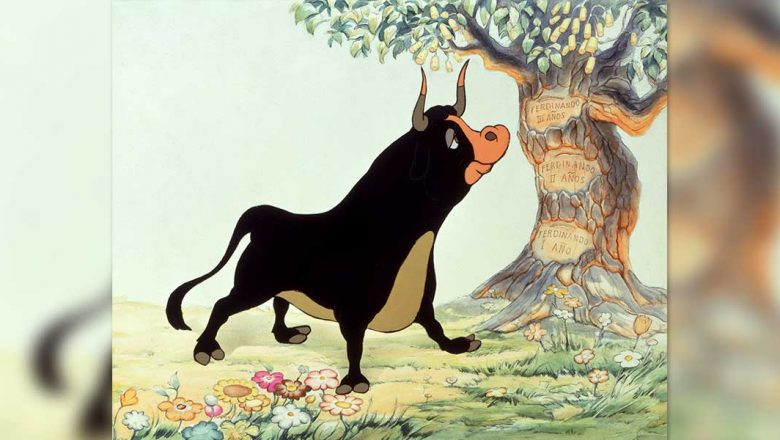
Ferdinand the Bull is a short film produced by Walt Disney and brought into the cinema in 25th November, 1938 which also won an Oscar for Best Animated Short Movie in 1938. Ferdinand’s Mother is voiced by Walt Disney himself and Ferdinand is voiced by animator Milt Kahl. The short film is narrated by Don Wilson. It is based on the 1936 published children’s book “The Story of Ferdinand”, on of the most successful children books of all times.

The plot started to talk about when Ferdinand was a cattle, unlike the other playful active cattle bulls who would jump around, bumping their head to each other, he just loved to sit under the shade of a tree quietly, smelling flowers. His mother suggested him to play with the other bulls but he refused and stated that he is happy in the way like this. Ferdinand grew up to be the biggest and strongest bull in the herd who still loved sitting down quietly and smelling flowers while the other bulls hoped to be the bull in a bullfight.

One day, five men came for a strong bull to be in the bullfight. While the other bulls showed off how tough they were, Ferdinand was still enjoying himself quietly under the shade. The five men were not satisfied to the bulls . Later, Ferdinand was stung by a bee. In a panic, Ferdinand was running through everything like if he was crazy. The five men were impressed by him so they took him to the bullfight.

The Banderilleros, the Picadores and the matador arrived to the arena. A lady gave the matador flowers. This led Ferdinand to run to him. Everyone was panicking and afraid but when the Ferdinand just sat down and smelled the flower, everyone was disappointed, the Banderilleros were mad, the Picadores were madder, and the matador was so especially mad. The matador tried so hard to make Ferdinand mad and fight with him but failed in the end. Ferdinand was sent back to his home. The animation ended with Ferdinand sitting on his favourite place, smelling flowers.