Major Post 8: Ragtime Bear

Ragtime bear is from UPA and was created in 1949. It was the first appearance of character Mr. Magoo, a nearly blind old man who enjoys peace and quiet. From the first scene Magoo’s personality is already introduced as we see him crash into the tree, which is soon explained by his poor eyesight as he tries to read the road sign in front of him. To show that his glasses magnify what he sees, Mr. Magoo’s eyes also grow larger when he wears them. He is stubborn and fully believes that he has everything under control although he decides to ask for help with reading the blurry sign. He believes that his nephew and everyone else are scatter-brained and don’t pay attention, which is ironic since Mr. Magoo is the one who is utterly confused.

The bear is shown as being oblivious to what is important to the people and only cares about Waldo’s banjo. When Waldo falls into the abyss, the bear reaches for the banjo instead of Waldo, letting him fall. Similarly, when Mr. Magoo falls off the stairs at Hodge Podge Lodge, the bear saves the banjo before it hits the ground but doesn’t catch Magoo.

Magoo is later fooled by his own weakness in believing that he has just shot his nephew. Upon realizing Waldo is alive, Magoo returns the banjo to him but still threatens to use the gun again, showing that his character has not developed much, as he’s still stubborn. Also, the bear hasn’t changed either, as he continues to play notes on the banjo, despite Magoo’s threatening to shoot at the next sound the instrument made.

Both the bear and Mr. Magoo are stubborn characters who want everything to go their way. They both face difficulty because of each other and neither change by the end of the story, which is not the norm with the character development I’ve seen in today’s animations.

Sydney McPherson
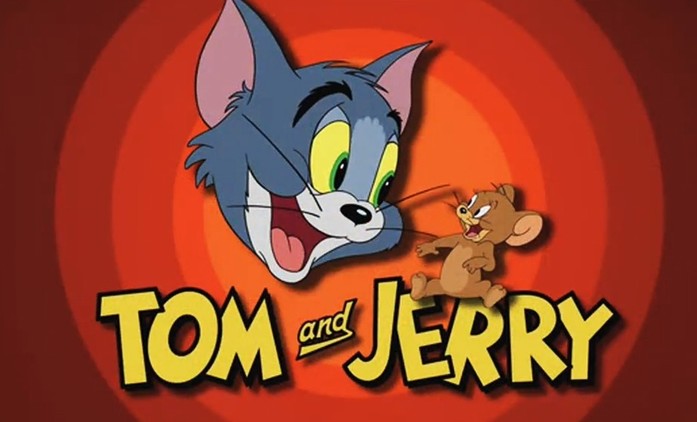
Major Post 05 – Tom and Jerry

Though I like watching Disney’s animation and Looney Toons, Tom and Jerry is my favourite TV show since I was young. Same as the other two, Tom and Jerry is a animated series of comedy short films. It is created by William Hanna and Joseph Barbera in 1940 under the name of MGM cartoon studio. The main characters are Tom, the cat, and Jerry, the mouse. The shorts are mainly talking about the rivalry between them, inspired in real life at that time that cats were kept for catching mice. Each short usually center on Tom’s numerous attempts to catch Jerry and the mayhem and destruction that follows behind. The ending usually depicted Tom’s another failed attempt to catch Jerry because of Jerry’s cleverness, skilled abilities to escape and luck. However sometimes, the show depicted Tom and Jerry together to solve issues or have interactions with other characters, a friendship between Tom and Jerry sometimes being told too.

Not only the plots are fun to watch, the music plays a big role in the show too. The newer spin-offs of the show has less music and with more dialogues of the characters other than Tom and Jerry which I really don’t like about, probably because I lived my childhood with them not talking but it is just my personal opinion. The original show didn’t have too much dialogues in them. The whole show is driven by musics and sounds, like the most old animations we have watched in class. Even though it is an American show, as a kid, I could still understand what happened in general and enjoyed the laughter it gave to me. I am a grown-up now but whenever I get a chance to watch an episode again, it is still enjoyable to watch. I think this is a key as a successful cartoon : Never get bored and memorable.

Is Tom and Jerry your childhood cartoon show too?

Is it Always Right to Be Right? (1971) *continued*

Major post 8 By Victoria Courchesne

*Continued analysis from my major post 7*

 Bosustow challenges animation as a medium by creating the multi-media film using several different animation techniques. He successfully utilizes the 2 ½-D animation technique while incorporating live action clips among the animated sequences. What comes out of this application of multiple mediums into one short film is a period piece that seems to remain relevant throughout time. While his images depict an artistic symbolism of stereotypes from different movements, he manages to communicate clearly upon who the subjects are intended to be.

The film overall carries an ambition that can only be derived from an artistic origin. There is no superficial comedy nor does the style fit the mainstream animation design of the time. The film strives to be thought provoking without reservation in attempt to appease one group in particular. It is a call to the world to react and change.

            Bosustow’s final call to action reverberates as this “…the search for the truth is never over- that the challenge is always the same; to stop fighting long enough to listen to learn, to try new approaches, to seek and test new relationships, and to keep at a task that never ends”.

            The final image to close the film shows the words “Not The End”. And in that last remark, the message of the film is echoed to us that the fight is an unending one. Even in the year 2019,  almost 50 years after its release, we can still learn from the film.

Major Post 7: How a Mosquito Operates

I’ve written about Winsor McCay before, however I wanted to revisit another animation by him. McCay created “How a Mosquito Operates” in 1912. We discussed that McCay created comic strips before he did animation, and it really shows in how clean and precise his drawings are. Since he is first an illustrator, it is interesting to see how he turned drawings into animation. There is nice movement in the second scene as the man walk towards the door of his house. His dress drags behind him and there are wrinkles in the fabric to show the twisting of his body. McCay’s draftsmanship shines most when either the man or mosquito do any rotating motions. While they rotate, they stay exactly on model and the forms really seem round, which McCay achieved without any interior construction lines.

The design of the mosquito is hilariously large. It really adds a fun element to the animation starting from with first scene to see the scale in comparison to the man. I noticed that McCay uses looping animation and this “stuttering” where the animation will reverse and then continue several times. At first, I thought it looked strange, yet now the more I watch the animation, the more I enjoy the style and the overall look that the looping adds.

The man feels more like an illustration in motion while the mosquito, more like an animated character. It is less stiff and does some expressive movements with its legs and long nose. Lastly, I really like this animation because it is relatable. I have dealt with mosquitos pestering me while I try to sleep, and I’ve been in the man’s position. It feels like the mosquitos are never satisfied after one bite and it’s funny to see that experience translated into this animation with a ginormous mosquito.

Sydney McPherson

Major Post 04 – Nick Park

Nick Park is an English animator, director and a writer. His famous works are stop motion animation : Wallace and Gromit, Creature Comforts and Shaun the Sheep. He also won a lot of Academy Award with Creature Comforts, The Wrong Trousers, A Close Shave and Wallace and Gromit: The Curse of the Were-Rabbit. He also received five BAFTA Awards, including one award for Best Short Animation for A Matter of Loaf and Death.

I found Creature Comforts the most interesting one. It is one of the stop motion clay animation made by Nick Park in 1989. They are animated comedy shorts. Basically, the studio will go interview some non-actors questions. The answers they have will be put into animals and match to the lip syc so it gives a feeling that the creatures are taking an interview from us. They have a lot of new versions of this series. The original and the first one of Creature Comforts is an interview to the animals from a zoo, talking about their current home conditions. The non actors were interviewed to talk about their home conditions. They are the residents of both a housing estate and old people’s home. After recording the voices, Nick started to fit the voices into different animals so the short animation is created.

They have a youtube channel for the new series of Creature Comforts. It is sometimes pretty sad and cute. They are very stylized, very easy to recognize.

“Is it Always Right to be Right?”

Major Post 7 By Victoria Courchesne

            **For sake of word overload- I split this analysis into two parts, the second part will continue in my Major post 8.**

            Before reading the post, I implore you to watch the animated short Is it Always Right to Be Right? (1971) along with my previous blog post #6.

            In this post I will discuss the short in an analysis and my overall opinion on the piece created by Stephen Bosustow studios. The 8 minute short features narration done by Orson Wells and discusses a divided world where everyone thinks they are right. The film mainly features the two sides, the “old” and the “young”. The “young” seem to represent different movements within the late 1900’s in America, such as the peace& love movement and the civil rights movement. The “old” seems to represent the people in power at the time of those movements, such as the government, certain political figures, and large corporations. The style of the animation in the film is a loose, sketchy style, fitting well with the blend of the various live action television shots Stephen incorporates. He also breaks the narration with cuts of sound clips that apply to each side. The sides continue to divide until the turning point of the film upon which the film introduces a question “But what if I’m wrong”. The film’s division seems to unravel itself from there, concluding that both “sides” could come together to find their common ground and be responsible for creating a better world. 

Continue by reading my major post 8.

Major Post 7: UPA

UPA – United Productions of America (1943)
Founded by Zack Schwarts, David Hilberman, and Stephen Bosustow

UPA is rather design and style orientated, compared to Disney’s more realistic style. After their start up; which was focused on industrial and World War 2 films, they eventually made many original characters, stories, and short films starting from around 1956 and won commercial success.

I really loved UPA’s Brotherhood (1946) , it shared a lot of awareness for issues of equality. A favourite quote from that video was along the lines of needing to ‘practice’ that brotherhood as well as just ‘knowing’.

UPA’s design-driven visuals to spread information, influences many now. Their heavy use of shapes led to more abstract works, which continued to be used everywhere today – mostly within informative subjects.
Below is one of my favourite projects, in which animation is used to explain facts in a way where it’s much easier to absorb.

Even in styles, UPA and the video above, has similarities: the lack of outline and heavy silhouette orientated mind-set allows information to be the focal point, rather than detailed, realistic visuals.

Class notes:
Outline used in specific areas (E,g, John Hubley’s Robin Hood – no outline for BG but has outline for characters to make the stand out).
John and Faith Hubley – after being fired by UPA in 1952, they did not give up and started Storyboard Production in commercials.
Edgar Allen Poe – creepy “The Tell-Tale Heart”

Major Post 6: The Barn Dance

Two ways through which Disney’s older animations create entertainment, are exaggeration and character development. A fitting example is “The Barn Dance” created by Ub Iwerks in 1929. In the opening scene, Mickey Mouse is riding in his carriage. He whips the horse to get it to accelerate and suddenly the horse quickens from a steady trod to a jumping gallop. Soon the carriage begins to gallop as well, instead of rolling along smoothly. Next, we arrive at Minnie Mouse’s house as Mickey has offered her a carriage ride to the barn dance. Mickey’s love for Minnie is established through the hearts floating around his head throughout.

In this scene, Minnie is presented as the woman that all the men want, as a competition between Mickey and Pete ensues when Pete arrives in a swanky vehicle. Mickey doesn’t have a car horn like Pete, and so he uses a duck’s call by squeezing the duck to impress Minnie. Minnie continues to test the waters throughout the animation, going back and forth between Mickey and Pete when one disappoints her. During the dancing scene, Mickey continuously steps on Minnie’s feet and legs and his shoes grow impossibly large until he is trampling Minnie. Upset, Minnie goes to dance with Pete, reinforcing the way she is portrayed as having no commitment to neither Pete nor Mickey. This spurs on the love Mickey has for Minnie as he continues to impress her.

Another interesting aspect is the repetition of movements that make the character’s cohesive. In the scene at Minnie’s house, Mickey and Minnie both throw their noses upwards towards Pete in dislike. This is typical for Mickey because he does dislike Pete. However, after Mickey steps on Minnie’s toes while dancing, Minnie throws up her nose towards Mickey in dislike. Before, we didn’t see the full extent of Minnie’s non-commitment to the two boys, yet now Minnie has returned to Pete who she left just a scene prior, which in turn spurs on Mickey’s competition with him.

Sydney McPherson

Major Post 03 – Interaction with Audience from Disney

When Professor Jake talked about Fantasia from Disney, I misunderstood as the other one that I love watching which is also made by Disney. I found myself often messed this one up with Fantasia.
The one music video or a show that I am talking about is Mickey’s PhilharMagic. The animation is created for a show in Disneyland. I love this animation when I was a little girl. Even though it is a computer animation, I do still find some old fashion taste from the old animations showed in class. The whole animation is driven by music. A lot of the content in between is basically scenes and songs from the classic animated Disney animated movie but are remade for dramatic effects and interaction with Donald Duck. The consideration of the characters in it will interact with the audience is what makes me remind of the animations showed in class. Remembering there are scenes when the characters were doing something or talking but they were actually talking to us, the audience.
For example, Hell-Bent for Election (1944), directed by Chuck Jones. There is the scene of the short man in suit, he was being frustrated and transformed into Hitler. He then was embarrassed and returned back to himself. This is a symbolic movement of the animation but have you ever think of who is he embarrassed to? Us, the audience because in any animations, we are watching the story goes on in god mode, we know a lot more than the characters in it. If you think about it, from the old animations, the characters sometimes interacted with the audience to create a sense of humor that makes us laugh.

I do not have a proper link to watch it in the best quality because it is a show in Disneyland. No one got the original video, it is best to watch it in person but you have to pay to watch this.
This is the one I think it got the best quality to watch it.
If I remembered it correctly and they still haven’t remove it, this can be watched in Disneyland Hong Kong too.

Major Post 02 – Kubo and The Two Strings

In the old days, people made animation frame by frame. They have to draw all the actions one by one on the frames so that they can show them on screen. Nowadays it is much easier to create animation with all the help from software. While it does not seems to be old fashioned anymore, stop motion animation is still being created.
Stop motion animation has been around for centuries because it is one of the first generation of how an animation can be created. Making puppets and props are a extra process of the creation. Not only the one single character puppet has to be made, the expressions of characters, a LOT of props, the environment, a lot more to be considered based on how the story goes, will something break through the story, will someone transform, the process of transformation. In 2D and 3D animation, you can copy and paste on the next scenes, editing from there, saving time but in stop motion, you have to make everything that are needed for the production.

I am here to share my favourite stop motion movie so far – Kubo and The Two Strings. Unfortunately, I didn’t get to watch this movie in the cinema, I watched it from a website, I regret it so much. I love this movie no matter what but the feeling of watching it on the big screen will be epic.

The story is talking about a boy named Kubo. Kubo is a boy who has magical power. Everyday, he will go to the village and tell stories of his father, the almighty samurai, Hanzo with his shamisen(a Japanese instrument) and magical origami figures. He has a mother who has a deteriorating mental state. He was told not to stay out at night for the moon king will find him. However, one day he failed to reach home before the moon rises. He got attacked by a pair of sisters who introduced as his mother’s siblings. His mother saved him and sent him away, left alone to face her sisters.
Kubo woke up with a new ally, Monkey. Not long after he met Beetle with no memory. The three of them have to go on a journey to find the 3 legendary items, Sword Unbreakable, Breastplate and Helmet Invulnerable Impenetrable, in order to defeat the Moon King. Throughout this long journey, Kubo also discovered that Monkey was the reincarnated spirit of his mother and Beetle was his father who got cursed from falling in love with Kubo’s mother. Kubo was protected once again by his parents, his father and mother were killed in the end.
The Moon King appeared in front of Kubo and offered to give him immortality. Kugo refused so he started the epic fight with the Moon King who later transformed into a Moon Beast. In the end, he used the ultimate magic, Love and Memories to defeat the Moon King.

I highly recommend to watch this movie, it is still the best one I have watched so far. I adore the style of designing and the whole concept, they are very unique. The process of production is incredible too!