

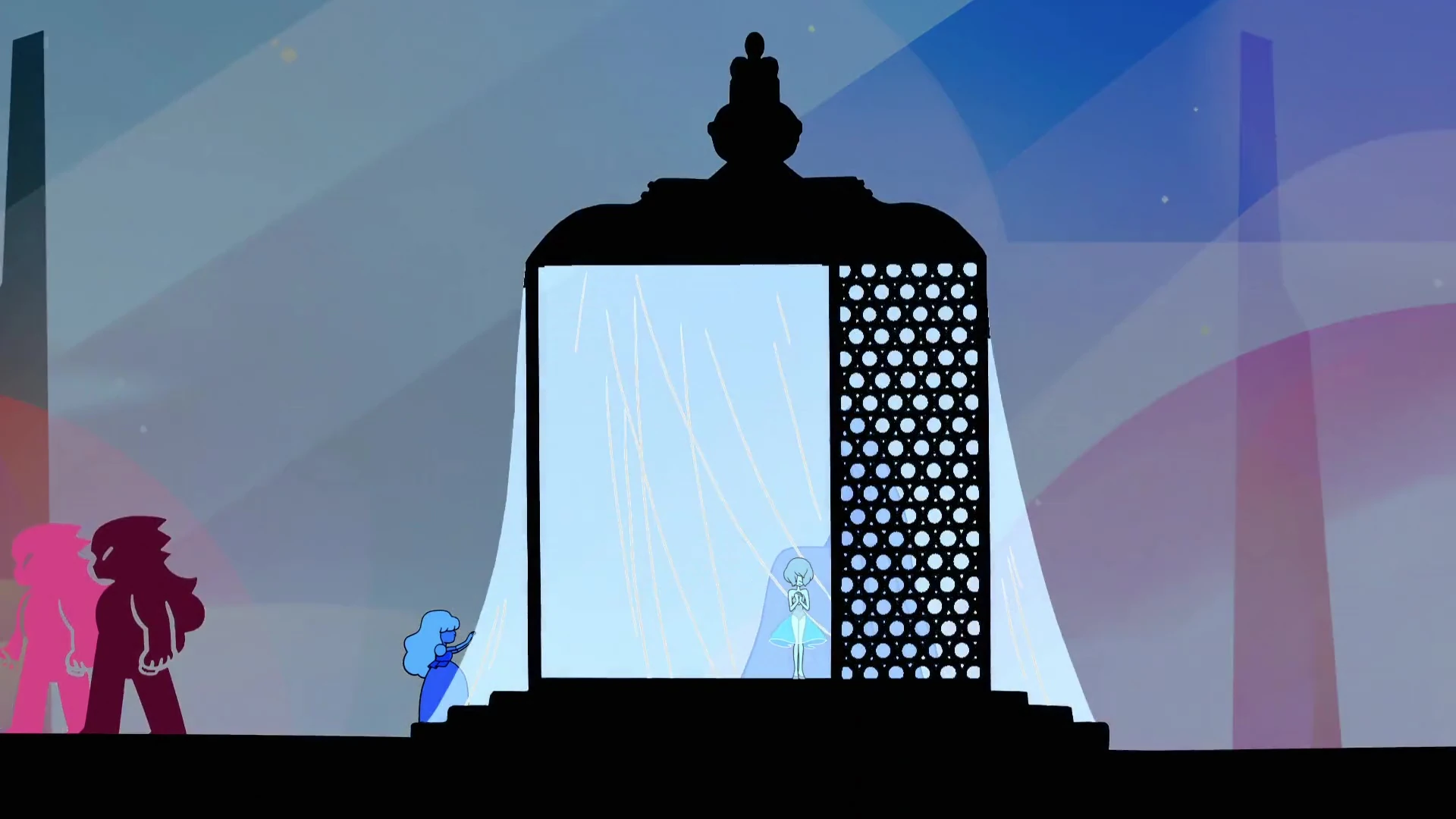
As I wrote about in my posts on Lotte Reiniger, the homages to the influence of her work and her silhouette technique has been far reaching throughout animation history, even if sparse. But there is one contemporary spiritual disciple of Reiniger, whose work extensively uses both silhouette and themes of fairytale fantasy like the German pioneer, yet clearly has his own distinct style and a decidedly modern sensibility.
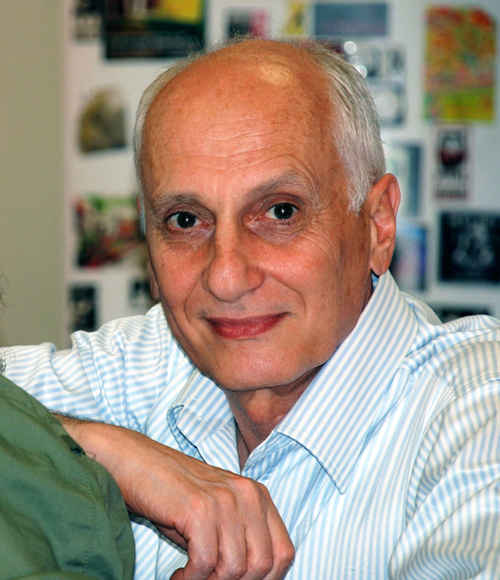
The French animator and director Michel Ocelot spent his childhood in then-French colony, Guinea, West Africa, then moved back to France in his adolescence. His most well-known works mainly use a fairytale format, with fantasy elements and a moral (more on that later). He has done a series of films around his African village boy hero Kirikou, but he has also used various different cultures as settings for his stories.

.

.
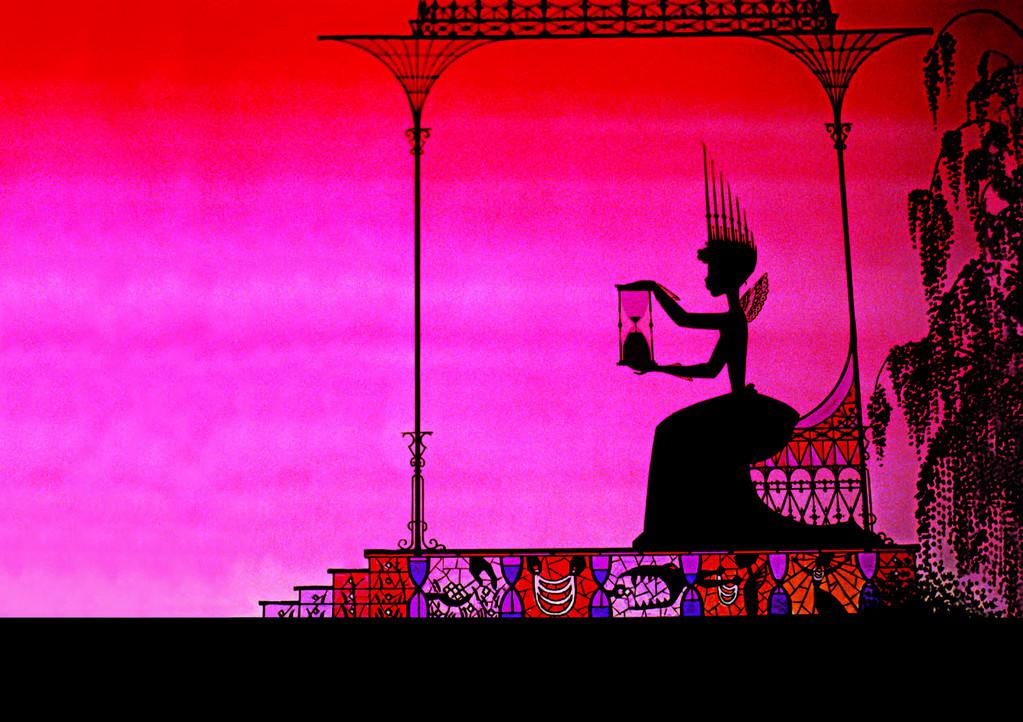
The best example is his series of televised fairytale fantasy shorts that he started in 1989 with Ciné Si; short fairytales from different cultures, some adaptations of existent folktales and some original concoctions, done exclusively in silhouette style. Ocelot combined cutout animation (a la Reiniger) with cel animation, which solved the problem of the analog cutout method being hard to control for precise movements. Dialog audio has become the standard for contemporary films, which was not the case for Reiniger when she made Achmed, which used intertitles for the characters’ words. By cutting in cel animations for closeup shots of his characters, Ocelot was able to achieve precise and very convincing lip sync animation.
Aside from improving upon the limitations of Reiniger’s technique, Ocelot’s enhancing treatment of the ‘fairytale’ is what truly sets him apart. Whether it be loose adaptations of existing folktales, or complete originals that he created from the ‘building blocks’ of these tales, he puts modern twists and trick endings in his stories. They clearly reflect his progressive societal views on gender, or otherwise postmodern influences, sometimes in direct response to the backwardness of traditional prince/princess tales to our modern eyes. To use his compilation film Princes et Princesses as an example: the episode ‘The Witch’ sees the male protagonist couple up with the witch he is supposed to battle, instead of the princess. In ‘The Fig Boy’, based on an Ancient Egyptian story, the Pharaoh is changed to a Pharaohess. In the tale ‘Prince and Princess’, the titular prince and princess magically switch bodies, and bicker about having to live in each other’s social role for the rest of their lives.
.

.
A good work of Ocelot’s to compare to Reiniger’s Adventures of Prince Achmed (1926) is Ocelot’s feature Azur & Asmar (2006, released in some places with the subtitle The Princes’ Quest); both have the aesthetics and setting of Arabia, and both use motifs of Arabic fairytales.
However, the latter film is an original story by Ocelot, featuring a European protagonist and his adoptive Arabic brother. Thus Ocelot gives quite a realistic portrayal of cross-culture interactions between Europe and Arabic countries (colonialism, racism…) within a traditional fairytale story structure. It even touches on the question of cultural identity, which has been increasingly discussed throughout the 20th and 21st Centuries, and I posit that it is a reflection of Ocelot’s own multi-cultural upbringing, being French, yet being exposed to African culture in his time living in Guinea.

Azur is also modern in the sense that it has embraced the digital age. Its animation is produced entirely in 3D, a relatively recent technical development in art and animation, which lends itself very well to the highly intricate, colorful, and decorative style of the film. Interestingly the characters are largely composed in side views, which is very much following the silhouette animation tradition.
.
With the case studies of Princes and Azur I wanted to highlight Ocelot’s interesting position in the fabric of animation and wider art history. His work is a wonderful combination of folktale aesthetic, traditional tastes, and contemporary insight and modern technology. I knew about him largely because I grew up watching his films, so it made me really happy to be able to explore his historical inspiration in the early animation pioneer Lotte Reiniger in class. Although he has expressed chagrin at being so often compared to Reiniger (“I’d found Lotte Reiniger’s films rather archaic and not very attractive but I thought to myself, ‘It’ll be fine for children.“), the comparison I believe is warranted, precisely because he was able to develop upon what Reiniger had innovated.
I hope that sharing his work will lead more people outside of Europe to appreciate his ingenuity.
Referenced from:
- ‘Ciné Si’, Michel Ocelot website, https://www.michelocelot.fr/#cine-si-en
- ‘Ciné Si’, Wikipedia, https://en.wikipedia.org/wiki/Cin%C3%A9_si
- ‘Michel Ocelot’, Wikipedia, https://en.wikipedia.org/wiki/Michel_Ocelot
- ‘Silhouette animation’, Wikipedia, https://en.wikipedia.org/wiki/Silhouette_animation
Claudia Lau

 ANIM223 - HISTORY OF ANIMATION - FALL 2019