Major Post 07 – Favourite Disney Princess Movie

When talking about Walt Disney Studio, Mickey Mouse is definitely the first one to come in mind with but other than Mickey Mouse, I am sure everyone got a childhood shared with classic princess movie too. The very first and successful movie is Snow White, that have showed a bit of its clip in class, Is Snow White your favourite one among all the princess movie that Disney has? If not, what is your favourite one?

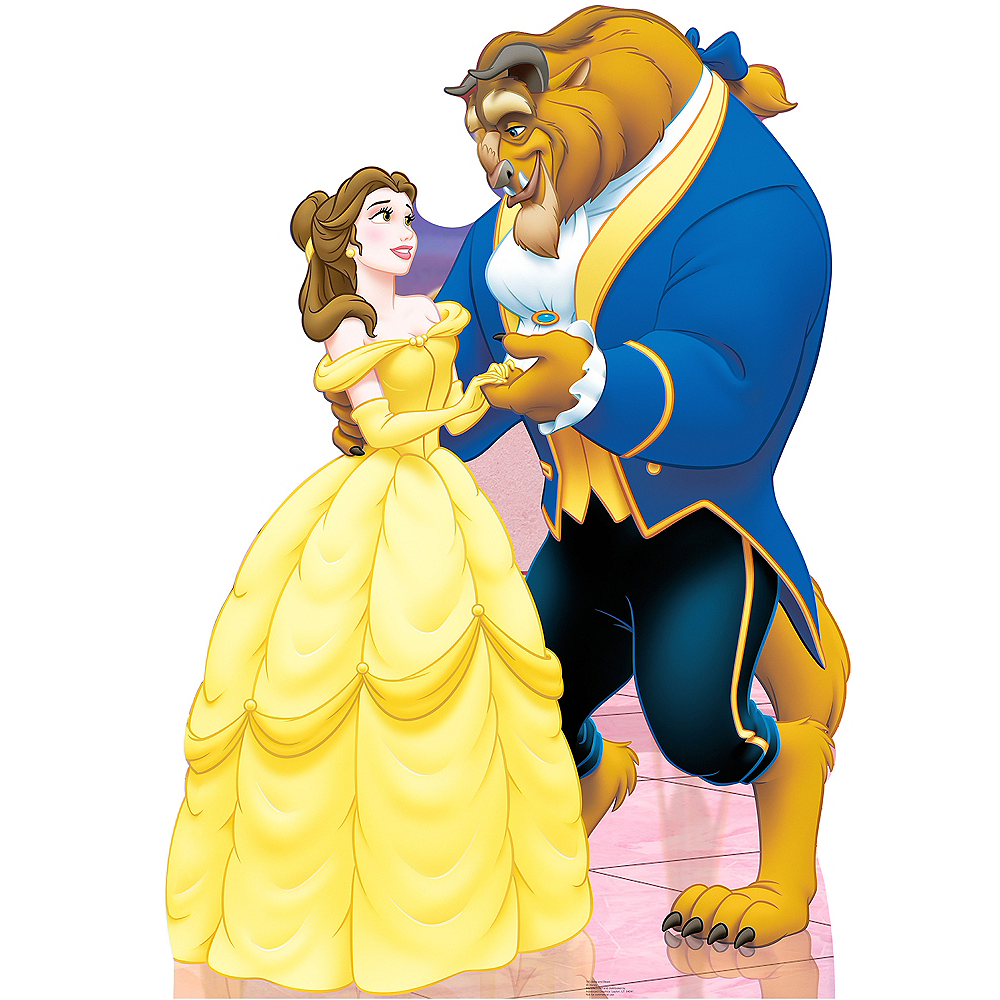
I don’t like Snow White because the story feels boring to me. Snow White is a very good movie at that time without computer animation but the story in general, I am not interested. My favourite movie is Beauty and the Beast. I love animals and monsters, also fantasy. I don’t like an ordinary romance so the story of Beauty and the Beast caught my interest the most since I was young until now. The live action one in 2017 is very well-done too, I almost teared for I found my childhood memories back when I was in the cinema.

The story of Beauty and the Beast is about the romance between Bella and Beast, who was originally a handsome prince, master of the castle. Beast was cursed for being a selfish and cruel prince he was. Beast imprisoned Bella’s father for stealing a rose from his garden for Bella. Bella then went out to look for her father. She offered to stay in the castle in returns of her father’s freedom. Thus the relationship in between began, Bella slowly turned Beast back to be a good prince that he should have been. The curse that Beast had can only broke by a kiss of true love so Beast tried to approach to Bella no matter how hard that is.

I just really adore the story. It is out of reality, this is why I love it. Reality is boring and fixed. Disney movies gave me an opportunities to step into their fantasy world, helping me to escape the stressful reality.
Major Post 6 – The Walt Disney Studio

For the sixth class, we learned about The Walt Disney Studio. The company was founded by the brothers Walt and Roy Disney. The did create different studios that would create their different animation. Walt was known to be a part of the “Kansas City Film Ad Company,” tbe “Laugh-O-Grams Studio” (1921), “Disney Brother’s Studio” with Roy Disney, and “Iwerks-Disney Commercial Artist with Ub Iwerks.

Ub Iwerks was Walt’s best friend and he did all the animation early on in the company. He also was a part of the creation process with Walt Disney to design the character Mickey Mouse. Iwerks was known for Steamboat Willie (1928), this was known as the first Disney cartoon to feature sound. Silly Symphonies started a few years after and one of them which was “Flowers and Trees” was the first animation to use the three-color Technicolor method. This was also known as “The Technicolor Process 4 camera.” This would conatin color filters, a beam splitter that would partially reflect the surface inside a split-cube prism, and three seperate rolls of black-and-white film. It would be in Red, Green, and Blue and negatives strip would be their complimentary color which was Cyan, Magenta, and Yellow respectively. Walt Disney was able to negotiate an exclusive contract to use the process until September 1935. The multiplane camera was also used during these times to create depth.

One of the videos we watched which was “Reason and Emotion” (1943) by Bill Robert, had reminded me of another animation with a similar story telling style. This was “The Story of Menstruation” (1946) which was produced by Walt Disney. This would inform girls all about menstruation at the time.

Major Blog Post 6-Walt Disney Animation Studio

After the production of Steamboat Willie in 1928, more space was needed for the increase of workers so Walt Disney decided to expand the building. The succeed of using sound in Steamboated Willie made Disney’s foremost animation studio in Burbank California. Then they produced the Silly Symphony series including The Skeleton Dance(1929), Flowers and Tree (1932) and Three Little Pigs(1932). Flower and Tree was their first cartoon in color. We can see when Walt Disney entered the field he did not get immediate success. I was quite surprised by how he maintains his business with limited workers and a tight budget after his company was stolen by the producer of Oswald the Lucky Rabbit. However, Disney once said, “I have been up against tough competition all my life. I wouldn’t know how to get along without it.” I believe Walt Disney’s talent in storytelling and his passion for animation are the keys to his success. The studio went from Steamboat Willie to The elegant and sparkling beauty of Snow White in ten years. I love the character design of the Seven Dwarfs in Snow White because it conveys the personalities of each Dwarf. Dopey and Grumpy are my Favourite. I also love to sing “Heigh-Ho” while I was hiking with my friends!!!

Character Sheet of Dopey.
Character Sheet of Grumpy.
Heigh Ho- Snow White and the Seven Dwarfs.

Wendy Kong

Major Post 06 – Ferdinand the Bull

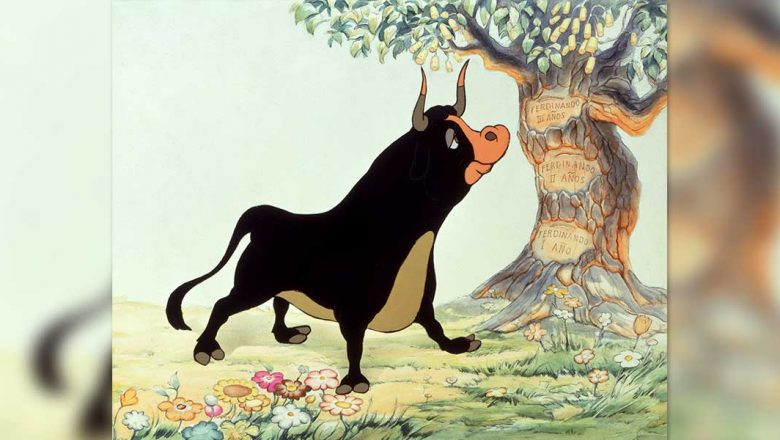
Ferdinand the Bull is a short film produced by Walt Disney and brought into the cinema in 25th November, 1938 which also won an Oscar for Best Animated Short Movie in 1938. Ferdinand’s Mother is voiced by Walt Disney himself and Ferdinand is voiced by animator Milt Kahl. The short film is narrated by Don Wilson. It is based on the 1936 published children’s book “The Story of Ferdinand”, on of the most successful children books of all times.

The plot started to talk about when Ferdinand was a cattle, unlike the other playful active cattle bulls who would jump around, bumping their head to each other, he just loved to sit under the shade of a tree quietly, smelling flowers. His mother suggested him to play with the other bulls but he refused and stated that he is happy in the way like this. Ferdinand grew up to be the biggest and strongest bull in the herd who still loved sitting down quietly and smelling flowers while the other bulls hoped to be the bull in a bullfight.

One day, five men came for a strong bull to be in the bullfight. While the other bulls showed off how tough they were, Ferdinand was still enjoying himself quietly under the shade. The five men were not satisfied to the bulls . Later, Ferdinand was stung by a bee. In a panic, Ferdinand was running through everything like if he was crazy. The five men were impressed by him so they took him to the bullfight.

The Banderilleros, the Picadores and the matador arrived to the arena. A lady gave the matador flowers. This led Ferdinand to run to him. Everyone was panicking and afraid but when the Ferdinand just sat down and smelled the flower, everyone was disappointed, the Banderilleros were mad, the Picadores were madder, and the matador was so especially mad. The matador tried so hard to make Ferdinand mad and fight with him but failed in the end. Ferdinand was sent back to his home. The animation ended with Ferdinand sitting on his favourite place, smelling flowers.

Major Post 6: The Barn Dance

Two ways through which Disney’s older animations create entertainment, are exaggeration and character development. A fitting example is “The Barn Dance” created by Ub Iwerks in 1929. In the opening scene, Mickey Mouse is riding in his carriage. He whips the horse to get it to accelerate and suddenly the horse quickens from a steady trod to a jumping gallop. Soon the carriage begins to gallop as well, instead of rolling along smoothly. Next, we arrive at Minnie Mouse’s house as Mickey has offered her a carriage ride to the barn dance. Mickey’s love for Minnie is established through the hearts floating around his head throughout.

In this scene, Minnie is presented as the woman that all the men want, as a competition between Mickey and Pete ensues when Pete arrives in a swanky vehicle. Mickey doesn’t have a car horn like Pete, and so he uses a duck’s call by squeezing the duck to impress Minnie. Minnie continues to test the waters throughout the animation, going back and forth between Mickey and Pete when one disappoints her. During the dancing scene, Mickey continuously steps on Minnie’s feet and legs and his shoes grow impossibly large until he is trampling Minnie. Upset, Minnie goes to dance with Pete, reinforcing the way she is portrayed as having no commitment to neither Pete nor Mickey. This spurs on the love Mickey has for Minnie as he continues to impress her.

Another interesting aspect is the repetition of movements that make the character’s cohesive. In the scene at Minnie’s house, Mickey and Minnie both throw their noses upwards towards Pete in dislike. This is typical for Mickey because he does dislike Pete. However, after Mickey steps on Minnie’s toes while dancing, Minnie throws up her nose towards Mickey in dislike. Before, we didn’t see the full extent of Minnie’s non-commitment to the two boys, yet now Minnie has returned to Pete who she left just a scene prior, which in turn spurs on Mickey’s competition with him.

Sydney McPherson

Major Blog Post 5: Walt Disney- Early Life

In this class, we studied the life of  Walt Disney, who was an animator, storyteller, film maker and entrepreneur. Disney’s interest in drawing grew when he was a child. He started as an illustrator for commercials in Kansas City where he met his best friend Ub Iwerks. They both had a passion for making their original animation. After a few times of failures, Disney began producing Alice’s Wonderland, combing live-action with animation in Laugh-O-Gram Studio. From there, we can see that Disney has a passion to work on fairytales and classical stories. Alice’s Wonderland was a big success so Disney invited his friend Iwerks to Los Angels.

Good days didn’t last long for them. After they created another successful character called Oswald the Lucky Rabbit in 1927, it was stolen by their producer Charles Mintz. I felt very sad for Disney and Iwerks as their creativity was stolen. At the same time, I also respect their spirit of not giving up.

To replace Oswald the Lucky Rabbit, they created Micky Mouse together. An employee said that “Ub designed Mickey’s physical appearance, but Walt gave him his soul.” Plane Crazy (1928) was the first appearance of Micky Mouse. Even though it was a silent film, I found it so interesting as it had tones of dynamic shots. Steamboat Willie (1928) which we might see it at the beginning of some of Disney’s famous animation, was the first Disney cartoon with sound and music. I love how the characters were moving with the beat perfectly. It soon became the most popular animation of its day. 

I’m sharing another old Mickey Mouse cartoon called Giantland (1933). Enjoy!! ^o^

Wendy Kong